Humidors are incredibly low-maintenance tools, which is pretty surprising considering the ways in which they keep our cigars safe and in prime smoking form. But despite their low upkeep, cigar humidors are not the type of tool you can "set-and-forget." Like any functional piece of equipment, humidors still require some routine care on occasion, and as long as you pay attention to their needs, they’ll take good care of your stogies in return.
As with any appliance that works around the clock, there are a few "best practices" you can employ that will keep a cigar humidor working effectively year-round. If you’ve owned a humidor for any given amount of time, none of these tips should prove particularly challenging, or surprising for that matter. New to humidor ownership? Well, now's your chance to study up.
Simply put, humidors are like automobiles. The more you do to keep it in prime working order, the better it will perform, and the greater the odds are that it will last you a lifetime. So, let's get to it, shall we?
Rotate Those Cigars Regularly

Cigar rotation and proper organization are two of the most important steps in humidor maintenance and should be done on a weekly basis if possible. This allows the humidity found within each cigar to be evenly distributed to other areas, and is one of the most effective ways of keeping the moisture levels within a humidor in check.
Cigars are made from tobacco, an organic material that excels at absorbing and releasing moisture. So if you notice your humidity climbing or dropping, give those sticks inside a rotation by moving them about to different areas. Chances are this will bring equilibrium back to that humidified cigar storage vessel.
Know What the Best Humidity Levels are for Your Cigar Humidor

The first, and perhaps most important, thing you can do to keep your humidor in good working order is maintain a consistent relative humidity (RH) level inside. Most humidors (our Klaro line included) operate best between 65-72% humidity, and should be kept at a comfortable temperature, which is typically somewhere around 70°F.
That said, if you are struggling to maintain control of the humidity within your humidor, here are some tips for keeping those figures within a respectable range.

Make Sure Your Hygrometer Can Accurately Measure Humidity

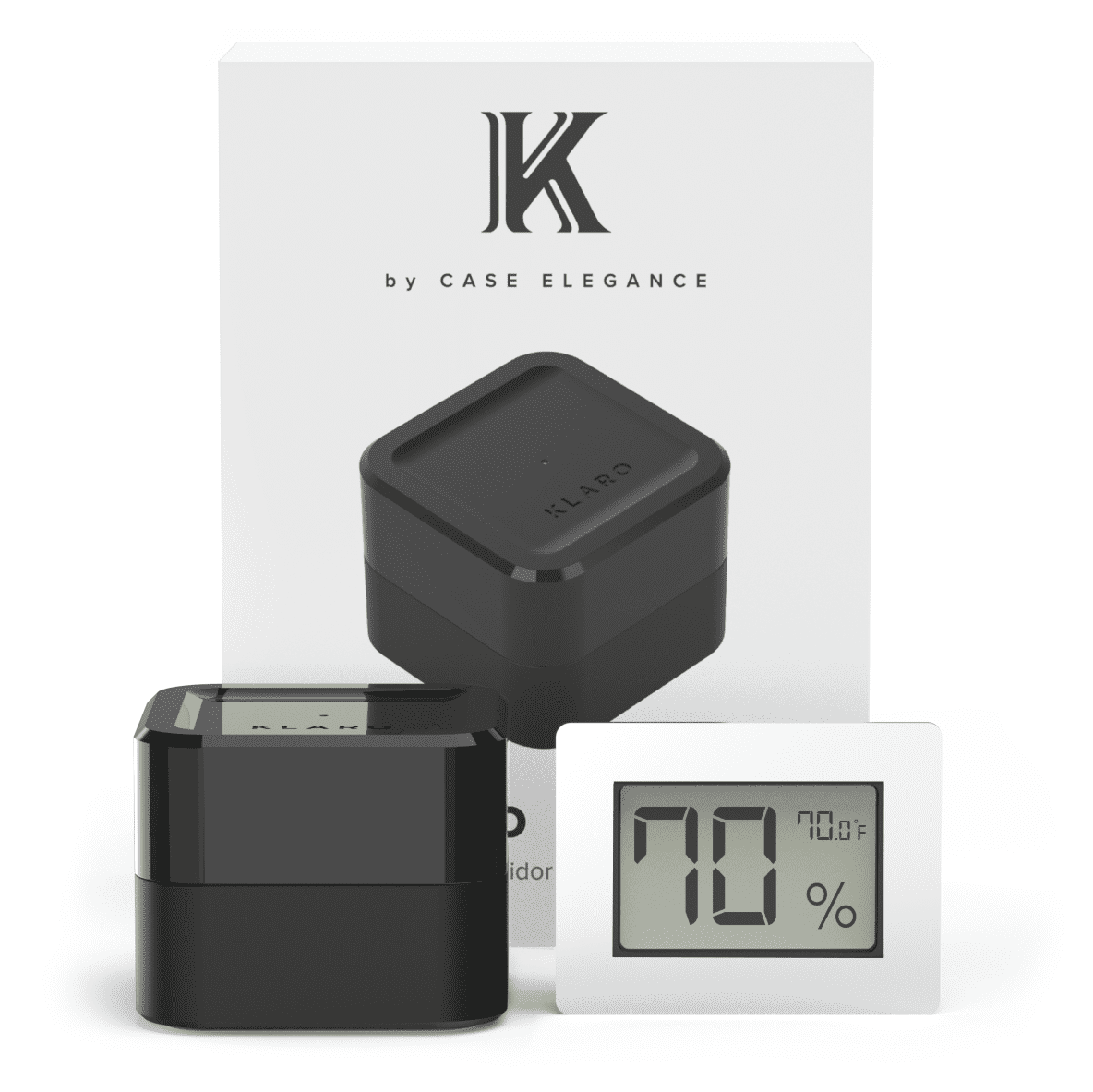
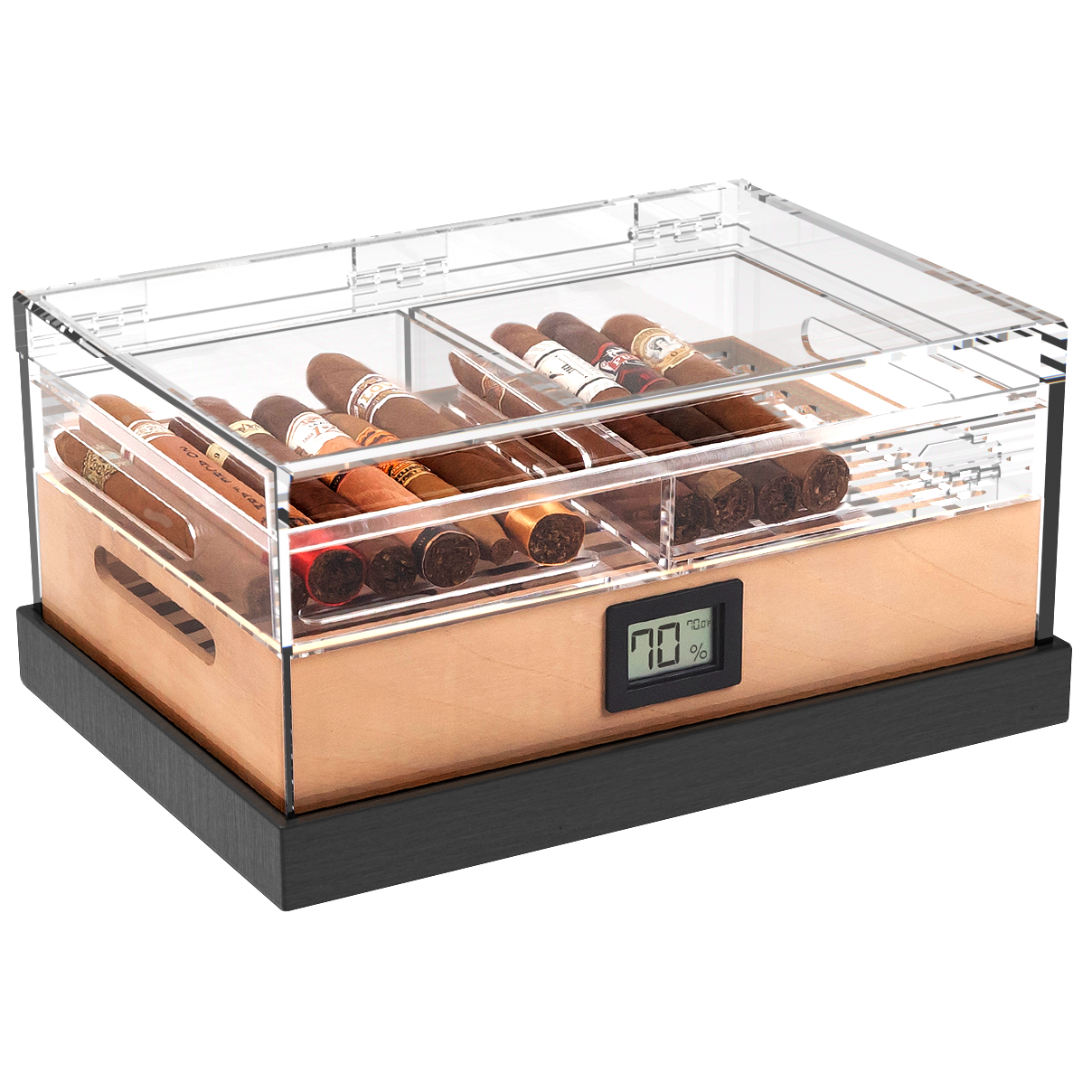
The first, and arguably most important humidor practice, is making sure that your hygrometer is working properly. A hygrometer is a tool that’s used to measure humidity in a space and can be either digital or analog. Modern humidors, like many in our Klaro line, include a digital hygrometer built into the unit itself. This allows you to check humidity levels without ever opening the box, which further reduces the risk of humidity escaping or entering the humidor.
If your humidor doesn’t include a built-in hygrometer, no problem. Simply pick up one at your local smoke shop, or better yet, snag a digital smart hygrometer from Klaro, and place it inside the humidor. When positioning a free-standing hygrometer, be sure to place it away from the humidification system. The humidity inside the humidor will always be higher near the humidification device, which is why it is usually best to keep the hygrometer in close proximity to where the majority of the cigars are being kept.
Not sure if your hygrometer is working right? Message a cigar-smoking buddy to see if you can drop it in their humidor for an afternoon. If it's working properly, it should register close to the same humidity level as their unit. Another option is contacting your local smoke shop. If they have a walk-in humidor, there's a good chance they will allow you to place it inside while you are shopping to test its accuracy against their unit. This not only gives you the ability to snag up some cigars, but it also helps support a local business while confirming whether or not your hygrometer is functioning properly.
If for whatever reason your reading is off by more than a degree or two, it's likely time to recalibrate or replace the hygrometer.
That said, the hygrometer that comes with each Klaro humidor has been calibrated in-house prior to shipping. So unless you find that your readings are way off, you won't need to calibrate any of our hygrometers at home. That said, if you find your readings are still way off for some reason, you can follow these hygrometer recalibration instructions.
Increase or Lower Humidity as Necessary

If you notice that the relative humidity levels inside your humidor are rising, you will need to lower them as soon as possible. You can lower humidity in Klaro Humidors by simply removing the humidification device for a day or two and allowing the moisture inside to dissipate. In excessively humid environments, a humidification device might not even be necessary during the warmer months of the year. Just place the humidification device in a sealed bag or locking container, then break it back out when humidity levels start to get low.
In contrast, if you notice the humidity in your humidor falling, you probably need to add more humidor solution. If your humidor is in a drier climate, or if it’s winter, you should use Klaro's Winter + Dry Climate humidor solution. Or, if you just need a minor bump in humidity, you can add a splash of our regular humidor solution. Those gel humidor crystals should appear plump and squishy at all times, so if they start shriveling up, it's probably time to reload, which is precisely why we came up with the Klaro Membership plan, which automatically covers you and your humidor's needs year-round.
Try to Keep Those Temps Steady

When it comes to humidors, temperature matters more than most people think. That is because temperature and humidity are linked, so wild temperature swings within a humidor can wreak havoc inside the box. The ideal temperature inside a humidor is generally considered to be around 70°, which is precisely why every Klaro hygrometer comes with an integrated thermometer.
As long as you have your humidor inside a temperature-controlled building, it’s unlikely you’ll experience much in the way of temperature swings. Just be sure to keep your humidor out of direct sunlight, because while they may look stunning glistening in the sun, it's only going to cause the temps in that box to rise exponentially.
In case you were unaware, extreme temps can cause serious harm to your cigars. High temperatures open up the tobacco and allow more humidity to enter, paving the way for squishy cigars that don't burn right, or worse yet, begin to mold. Even a temperature of 80°F or more could lead to ruined cigars if maintained day after day. So keep those temps down if you can.
On the low end, if your temperature is 65°F or cooler, it can cause the tobacco to tighten up, and the cigar will begin to feel dry because it’s not absorbing nearly as much moisture. This can also lead to cigars that burn poorly, with extreme situations resulting in cracked wrappers and split feet.
Keep That Lid Closed

A humidor is only as good as its seal. This is what allows the unit to keep moisture and humidity trapped inside, which your cigars then absorb. Every time you open your humidor, you’re allowing that precious moisture to flow outside of the environment you’ve worked so hard to maintain. During humid summer months, it does the opposite, and allows too much humidity to saturate the interior. To negate these issues, all you have to do is keep that humidor lid closed.
That isn’t to say you can’t open the lid to place new stogies in or snag one to smoke. Routine cigar rotation also requires keeping the lid open, so don't sweat it too much when performing these sorts of routine maintenance procedures. Just try not to regularly open your humidor to admire your collection, or leave it open after you select a stick. Open it, grab a cigar, and close that humidor back up.
If you’d like to keep an eye on your cigars, or want to show them off, consider a glass-top variety, like the Coyote Brown Military Humidor pictured above, or a glass Cylindor display tupperdore instead.
Season & Then Re-Season As Necessary

Every humidor requires seasoning when you initially set it up. This allows ample amounts of moisture for the Spanish cedar lining to absorb, and, in turn, enough remaining humidity for those stogies to soak up once they are placed inside.
There are several schools of thought on proper humidor seasoning techniques, but for our Klaro line, we recommend the process of using our proprietary humidor solution. This method, which you can read more about in our Ultimate Guide to Seasoning a Humidor, is proven to get any Klaro humidor up and running in a short period of time. In addition to our regular humidor solution, we also provide a Winter + Dry Climate Solution for drier climates, or for when your humidor requires a humidity boost in winter.
However, if you’ve neglected to add enough humidor solution, or the right type of solution, or your humidity packs are struggling to keep up, it's probably time to re-season the insides of the humidor. This requires taking all of the cigars out of the humidor and following the seasoning steps from initial setup, which means wiping all of the wooden surfaces within the humidor with humidor solution.
Seasoning is important to get right. You can find step-by-step instructions for seasoning each model within Klaro’s lineup on their respective product pages to remove any guesswork.
Don't Overload or Under-Fill Your Humidor

A humidor is designed to work best at partial capacity, but it also won't perform properly if it is under-filled. Simply put, you’ll have a much more difficult time dialing in humidity levels in a humidor that only has a few cigars in it, or one that’s completely maxed out, than in a unit that is 75% full.
When the Spanish cedar lining of a humidor breathes, it "exhales" any humidity it has absorbed back into the box. This allows the cigars that are inside to soak up this humidity. Should things start to dry out inside the box, the cigars may release some of their moisture back into the air, which may help internal levels, but can also dry out the cigar. It’s a push-pull type of environment, which, when calibrated correctly, should create balance within the humidor.
When your humidor is partially full, it allows air inside the unit to circulate, thus ensuring that all of the cigars within are receiving their fair share of moisture. Most companies will include a set number for how many cigars can fit inside a humidor, or at least an average. Since cigars come in many shapes and sizes, or "vitolas" as they are more commonly called, these numbers can vary greatly.
Parting Puffs

It may seem daunting at first, but keeping up with your humidor's maintenance needs and following the list of best practices we just discussed is actually pretty easy. In fact, most people find that taking the time to tackle these tasks and remembering to do them is more of a challenge than the actual care that is required.
This is precisely why we engineered the Klaro Valet smart hygrometer. Not only does it help you catalog your collection while monitoring the humidity levels and temperatures inside of that beautiful cigar box around the clock, but it also serves as a humidor maintenance reminder. Notifications regarding the need to rotate your cigars, refill the humidity tray, swap out humidor solution strengths, or reduce internal temps are all just a ping away on your connected device.
Now, as for the act of getting off the couch and tending to these mandatory cigar humidor maintenance needs, well, that's still all on you...