For thousands of years, tobacco use has had significant cultural and geopolitical impacts across the globe. From indigenous tribes puffing the peace pipe to doctors prescribing cigarettes to reduce stress in the 1950s, the leaves on this magical plant have long held medicinal, recreational, ceremonial, and religious significance across multiple eras and continents.
Pero while tobacco had long been grown in the Americas by various tribes, y was farmed as a cash crop by colonial settlers, the modern cigar didn't really become a part of American culture until the tail end of the Civil War. Popularized not just as a recreational vice but as a status symbol, this far more refined alternative to chewing tobacco and pipe smoking quickly carved its own niche into the market.
By that point, CubaH. Upmann, Partagasy Punch had already been up and rolling for a few decades, so Cuban blends were the top-tier option. But, with the popularity of cigars growing at a rapid rate, the formation of American-made cigar brands like Lovely Cigars, La Palina, J.C. Newman, and others was inevitable, and thus, the affordable, far more readily available cigar options became a reality.
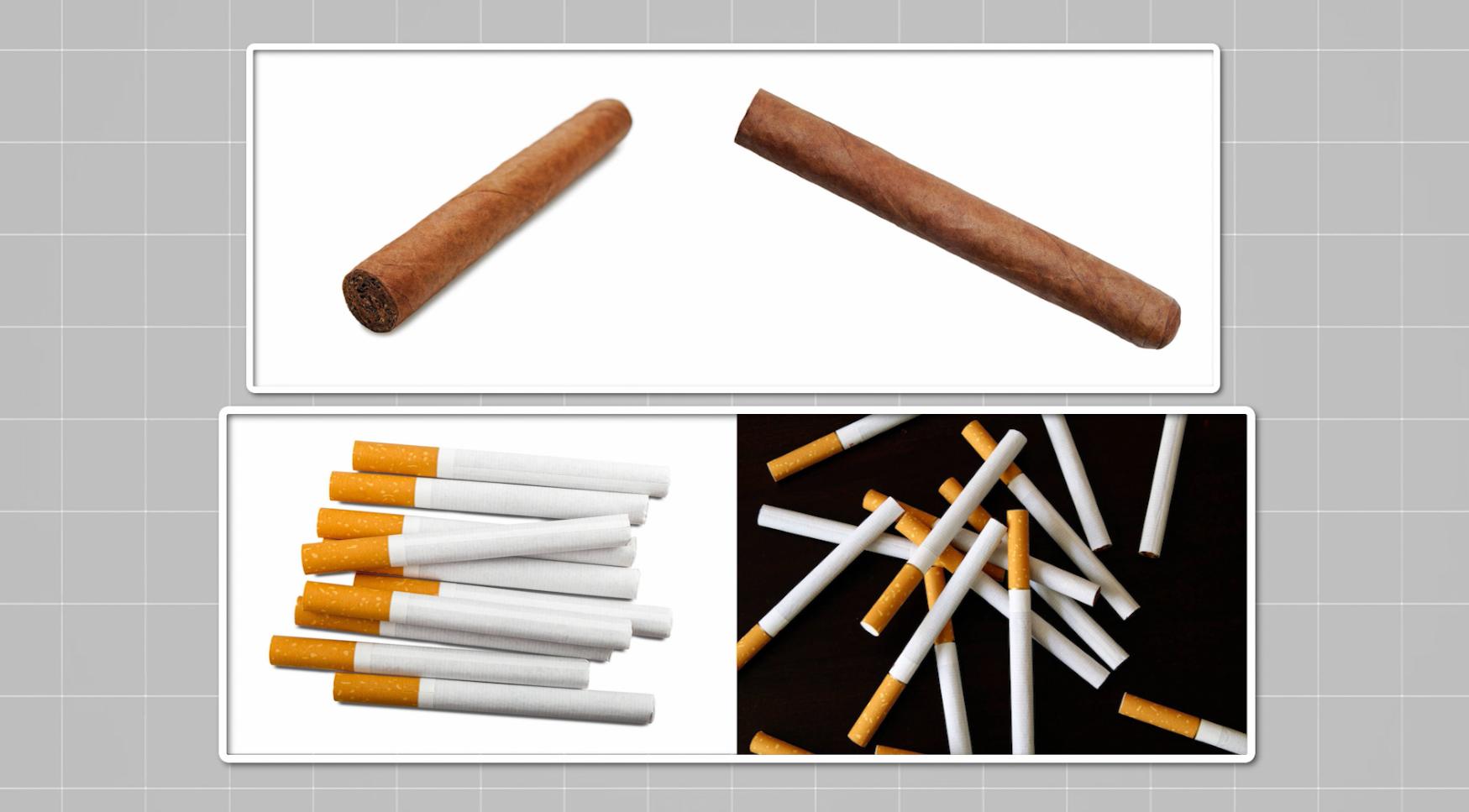
It was around this time that the first modern, machine-made cigarettes were produced, and the inevitable onslaught of mass-produced adult products that were to follow. It was around this time that smokers were faced with a serious question: What's the big difference between cigars and cigarettes?
Cigar vs Cigarette Composition

Unlike cigarettes, cigars are made entirely of tobacco, including the wrapper, binder, and filler leaves, which are carefully selected and blended to create a balanced cigar flavor profile. In contrast, cigarettes contain a blend of processed, chopped tobacco leaves mixed with various additives, including preservatives, combustion enhancements, and, in cer
Premium long-filler cigars do not contain a filter, and the draw is dictated by how it is constructed, which is always by hand, as well as the ways in which a cigar cap can be cut. Since cigarettes are machine-made, they are guaranteed to have a predetermined burn and draw, and are consistently proven to smoke a certain way.
Unlike cigarettes, the internals of a "long-filler" premium cigar are rarely made with shredded or chopped tobacco leaves. That said, certain "short-filler" cigars, also called a "Cuban sandwich," contain chopped-up scrap tobacco and are typically less expensive than long-filler blends. While it can have some influence over the cigar flavor profile, short filler is often more of an aromatic and structural component than one that is tasted.
Another one of the primary differences between cigars and cigarettes comes down to the external wrapper. The exterior of a cigarette is made of thin paper that has little to do with the flavor. Meanwhile, a cigar’s wrapper is an important component, not only for holding the tobacco leaf together inside, but also to aid in the flavor and aroma of the cigar, as well as combustion. There is also the cigar band, which is a marketing staple on many stogies y is rarely ever seen on cigarettes.
Fermentation is another key difference between cigarettes and cigars. Whereas cigarette tobacco is merely cured and dried prior to production,While aging time frames vary greatly depending upon the master blender's intentions, cigarettes never go beyond the bare minimum, as mass production, cutting costs, and storage space are the primary goals. This is one of the main reasons why the quality of the tobacco used in cigars tends to be so much more expensive than what is stuffed inside a cigarette.
Risks & Rewards

Compared to cigarettes, which often contain processed tobacco mixed with additives, cigars typically contain a higher concentration of natural tobacco leaves. Cigar tobacco also tends to be stronger and more robust in flavor, which can contribute to a head-spinning smoking experience for individuals who are not accustomed to this intensity. Nicotine levels in cigars also tend to be a lot higher, based purely upon the amount of tobacco used, as well as the plant strains that are utilized in a blend.
But unlike cigarettes, inhaling cigar smoke is not a common occurrence. That said, the lack of a filter can make cigar smoke feel far more intense even if it is not inhaled, and can be associated with an increase in tar intake and carcinogens. This can make for a very harmful smoky concoction debe you choose to inhale. Fortunately, inhaling a cigar in its entirety is pretty much completamente out of the question, as the potency of the tobacco used, as well as the intensity of the nicotine buzz felt, would knock most people on their ass after just a few minutes.
This leads to another major differentiation between the two types of tobacco products: Cigars are meant to be puff "quick fix," y are commonly smoked for the quick nicotine buzz they provide instead of just flavor.
Puffs de despedida

Que being said, there is no safe form of tobacco, regardless of whether you prefer to chew, smoke, snort, puff, or rub the stuff into your belly button. Both cigars and cigarettes produce harmful chemicals when burned, including those associated with the combustion of organic matter.
Lla big difference is that cigar tobacco doesn't come laced with man-made chemicals, and is still being grown, fermented, aged, and rolled the old-fashioned way. Essentially, cigars are far closer to being a "pure" tobacco product than anything else out there, which is one of the primary reasons why they tend to cost so much more than other tobacco products.
But, fire up a premium cigar blend, and you will immediately be able to taste and smell the difference, and that is why we smoke in the first place.