Even if you’re new to the world of cigars, you’ve probably heard of—or had other cigar enthusiasts mention to you—a humidor. But what is it?
When it comes down to it, a humidor is a relatively simple, and some would argue very necessary, component of cigar appreciation. This article will dive deeper into what exactly a humidor is, how it works, and why they’re important to keep your cigars in excellent smoking condition.
What Is A Humidor?
In theory, a humidor is simple. It’s a wooden box (or, in some extreme cases, a full room) that is designed to maintain a specific level of humidity and temperature that’s appropriate for your cigars. It is, specifically, the ideal way to store cigars.
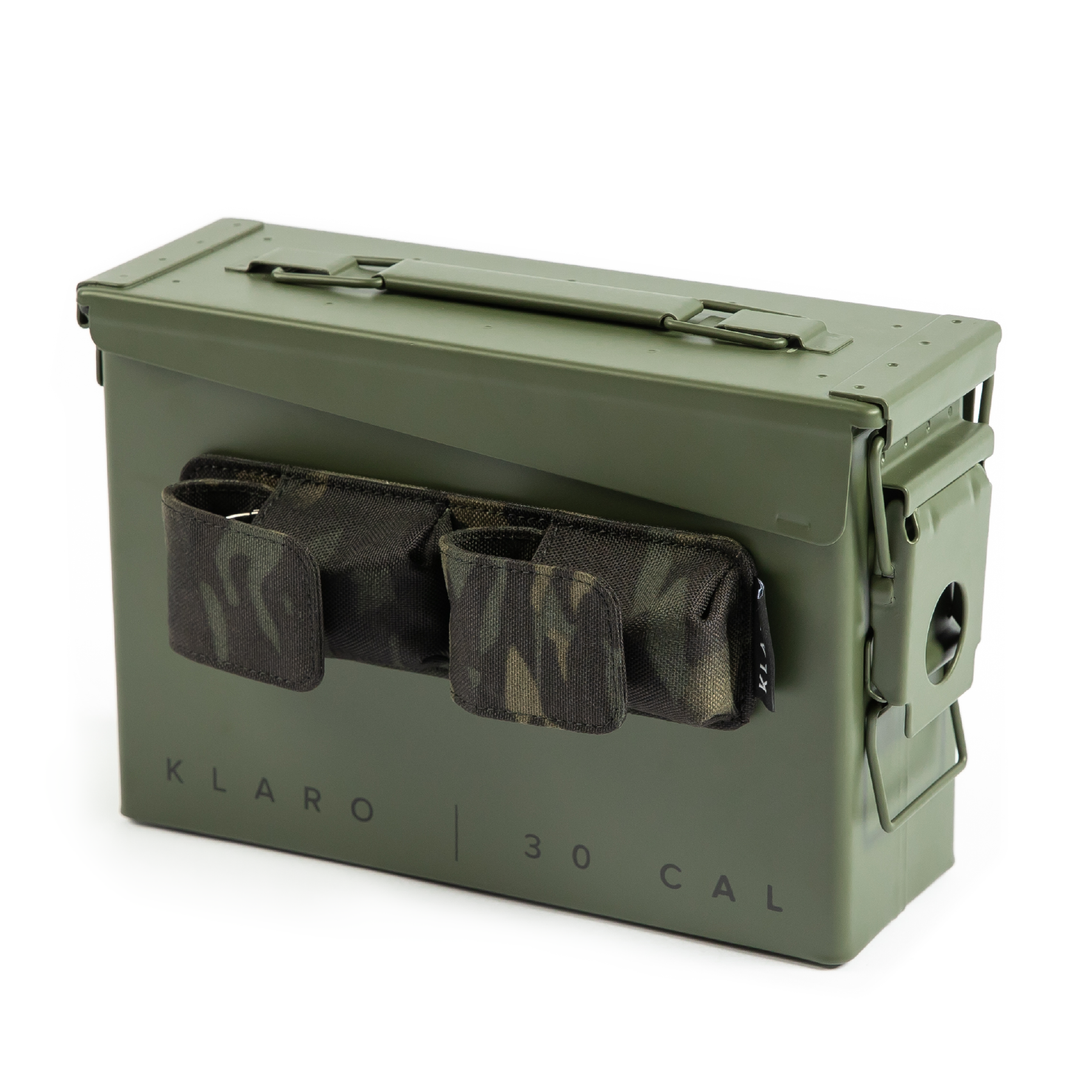
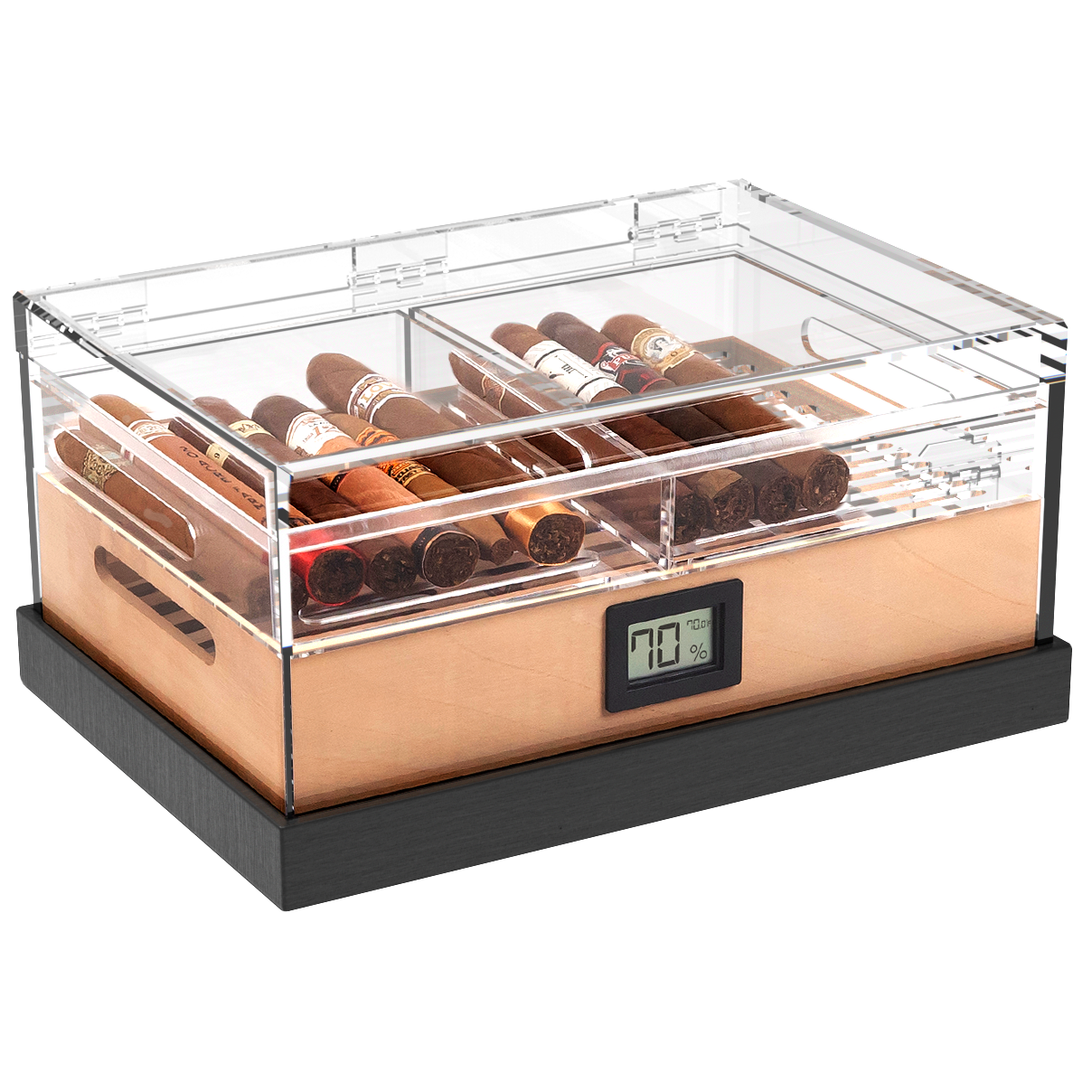
Humidors are boxes, cases, or cabinets that store cigars, available in many shapes and sizes, styles and designs. As simple as a compact travel humidor in your suitcase. As extensive as the walk-in rooms at cigar shops.
Regardless of size, what differentiates a humidor from a simple container is the function of key humidor components that work together to create an optimal storing environment for tobacco.
Why Do Cigars Need A Humidor?
Your prized cigars may be just fine for up to a couple of weeks at room temperature. Longer than that, and they'll start to deteriorate. Cigars are sensitive to temperature, humidity, and sunlight.
If you don’t protect them from the elements, they’ll wreak havoc on your stogies. In environments that are too dry, the tobacco inside will shrivel and lose much of the aroma that’s so appealing. That turns what should be a smooth and flavorful smoke into something bitter and acrid. In more humid environments, cigars can mold and rot—and you’re certainly not smoking that.
Tobacco is a tropical plant.
In order to maintain the characteristics that make it such a joy to smoke, tobacco’s native environment must be recreated and maintained. Most of North America doesn’t have the natural ambient humidity of Cuba, Honduras, the Dominican Republic or Nicaragua, so we must resort to artificial means to keep tobacco moist. The solution? A humidor.
Cigars are hygroscopic in nature
This simply means that they will, over time, dry out in a dry climate or absorb moisture in a humid one. And they will continue to do so until their own moisture content matches that of the ambient climate around them.
A damp cigar will not burn properly
Not only will it be difficult to keep lit, but also difficult to draw on. The smoke may become too dense, leaving the smoker with a sour taste and a rank odor. Also, over-moist cigars will frequently split their wrappers.
A dry cigar will burn too hot
Just as a damp cigar will cause problems with the burn, so too will a cigar that is overly dry. Without the proper level of moisture, the combustion temperature of your cigar will be too high and the smoke will be hot and acrid against your palate.
If you’re not smoking your cigars in a relatively quick timeframe, a humidor is a must. In fact, some may argue that ideal storage conditions can even make a cigar taste better with a little age.
How Does A Humidor Work?
A humidor is primarily made up of four key parts: a box of Spanish cedar, a hygrometer, a humidification system, and a good seal.
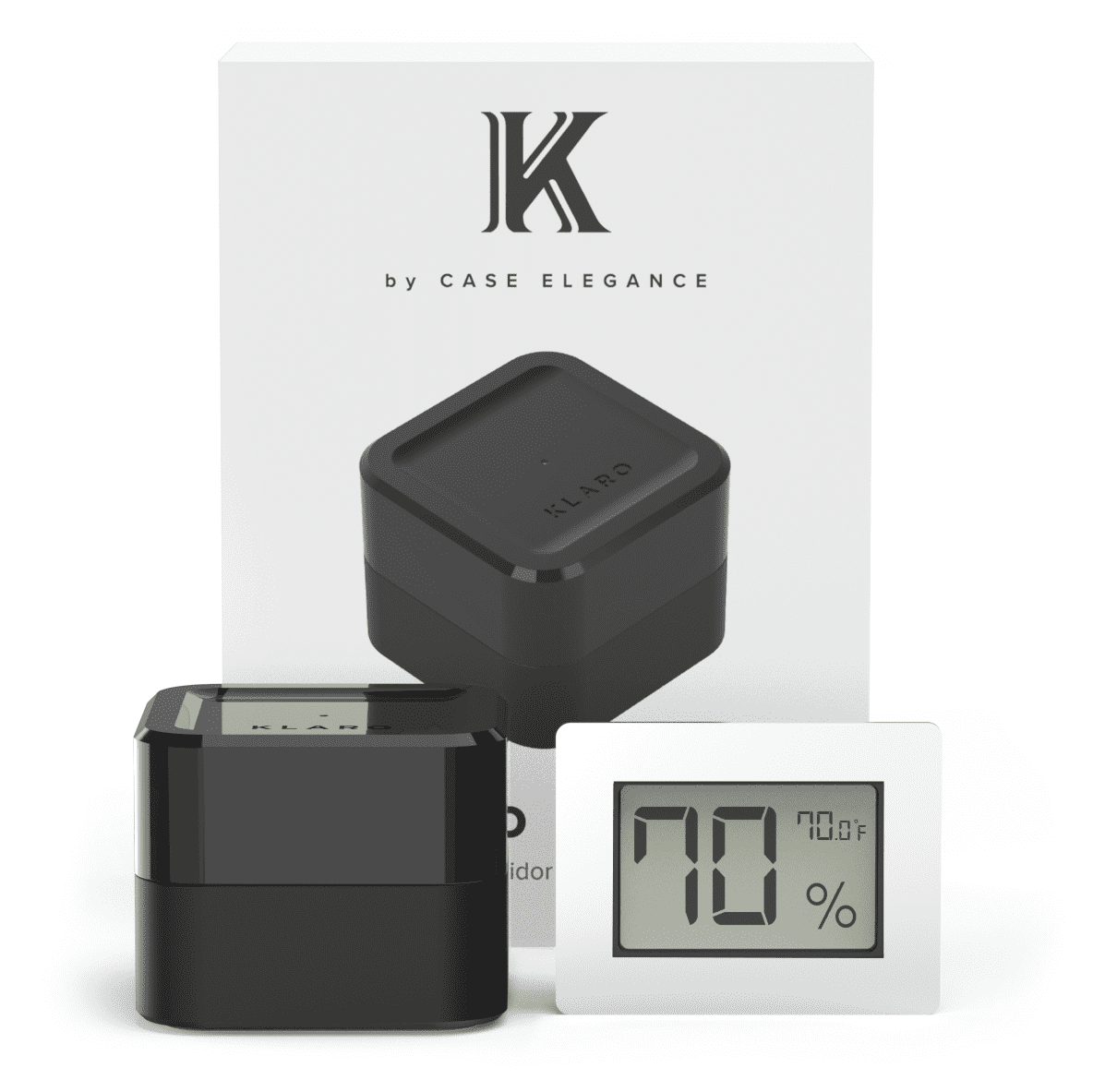
A Hygrometer measures the humidity inside your humidor. On a small scale, the humidity inside a humidor may fluctuate some, but usually a scale between 67-72 percent is good.
Different humidors maintain humidity in different ways, but all of them use some kind of humidification system. Ours use a hydro tray—which is a dish that holds seasoning solution—and gel solution crystals, which ultimately allow the hydro tray to hold more water. The water, combined with the temperature inside the box, allows the box to absorb the liquid (which you’ll read about next). Then, as the box breathes, it’s able to help the humidity reach equilibrium inside, creating the ideal environment for cigars.
The box of a humidor is made of a special wood called Spanish cedar. It’s a type of wood with absorbent properties that makes it perfect for humidors. Again, different humidors employ Spanish cedar in different ways. Some include just a veneer of it inside, which isn’t ideal. Others, like Klaro humidors, incorporate a full lining to allow for plenty of absorption—meaning it’s not necessary to reseason frequently.
Spanish cedar does more than just help humidify your cigars. It also cuts down on the likelihood of mold and mildew, as well as reduces the risk of cigar beetle infestation. Some cigar aficionados suggest the wood helps impart a certain flavor to the stogies as well. And, if you’re familiar with the aroma of cedar, you know it’s desirable.
Storing cigars is a long game–and humidors need to maintain the right environment indefinitely. To do so, they require a good seal to maintain internal humidity levels.
For a closer look at each part, see How Does A Humidor Work?
Types Of Humidors
When it comes to sizes of humidors, there are typically four main types used in industrial, commercial, or residential locations. Here’s a quick rundown:
- Walk-Ins: Walk-in humidors are what you’ll find in cigar stores and clubs, though some cigar aficionados maintain walk-ins at their home. These are often electric.
- Cabinets: Cabinets are standalone pieces of furniture. They typically hold over 1,000 cigars and are a great option for long-term, deep storage. They can be electric, too.
- Boxes and Desktops: These are the most common type of humidor and typically feature a horizontal lid to access the cigars. They’re typically built to accommodate 20 to 150 or so cigars, depending on their size.
- Travel Humidors: The smallest of the bunch. These are portable and can accommodate somewhere between two and 20 cigars.
Electric humidors utilize an electric humidifier. They are most often used on larger humidors and stationary humidors. It requires a power source (often a standard outlet) to function. In many cases, electric humidors can also regulate temperature, such as in the case of the frigador.
See 10 Types of Humidors You Should Know for more.
How Much Do Humidors Cost?
Humidors can cost anywhere from under $50 to hundreds of thousands of dollars.
At a certain point, those extreme costs go beyond function and features. But, within reason, the rule stands that the bigger and more complex the humidor, the greater the cost. Also, antique or vintage humidors will carry a hefty price tag. As humidors became more popular with affluent customers in the early 1800s and 1900s, more ornate and lavish features appeared in handcrafted designs.
How Do I Keep My Humidor In Good Shape?
Maintaining your humidor isn’t just a set-it-and-forget-it situation. There’s basic upkeep—but nothing you should be overly concerned about. If you purchase a high-quality humidor and take care of it, it’s likely to last you your entire lifetime (and maybe into another person’s as well).
To keep your humidor in good shape—and an ideal environment for your cigars—it’s important to “season” it. Seasoning your humidor means allowing the Spanish cedar to absorb enough water that it maintains a particular level of humidity. Like we mentioned before, every humidor has a different process for seasoning. Our Klaro humidors include everything you need to season it, as you can also join our Klaro Membership, which provides a year’s worth of materials.
Seasoning a Klaro humidor is a particular, but not complicated, process. While you may be tempted by the sponge method, which involves rubbing the interior lining of the humidor down with water, we’ve found that this can warp the wood and create an ill fit for the lid. You may also learn about other popular two-way humidification systems. While those are great for small travel humidors, they’re not a good option for a Klaro humidor.
When you’re seasoning a humidor, you’ll use our solution in a hydro tray and monitor the humidity levels over time with the hygrometer. On many Klaro humidors, the hygrometer is mounted on the front for easy viewing. Other humidors may have a separate hygrometer inside the case. Check out our Ultimate Guide to Seasoning Your Humidor to get the full, in-depth process.
Otherwise, you’ll want to monitor the humidity levels of your humidor every couple of weeks. Small humidors are difficult to dial into a single number, but a range between 67-72 percent is excellent. If you notice your humidor’s humidity levels getting higher or lower, you may want to remove the hydro tray for 12 hours and reassess the hygrometer.
Good humidors have slotted shelves that ensure air is allowed to circulate. And, the simple act of occasionally opening and closing a humidor suffices to exchange air inside with fresh outside air.
It’s best to keep your humidor in a temperature controlled environment, away from areas with major heat swings. For example, it’s best kept inside your air conditioned/heated home than out in the garage. Also, it’s better kept in a basement or room with low light than in the sun room. Temperature, moisture, and sunlight are all elements that can be dangerous to cigars, and while your humidor will go a long way to combat them, you can help it do its job by placing it in the best conditions.
Choosing A Humidor
So, which humidor is right for you? The answer certainly isn’t the same for everyone. A variety of factors to consider include your budget, how often you smoke cigars, how many cigars you keep at once, the space in your home you have to put your humidor, and other variables.
Before you buy the first humidor that looks good to you, think about your needs. Ask yourself questions such as the following:
- How often do you partake, and does that differ between seasons?
- How many cigars do you plan to keep at once?
- What’s your budget, or how much do you want to spend?
- Do you live in a climate with extreme temperature or humidity fluctuations?
- Do you want to be able to travel with your humidor?
If you’re an occasional cigar smoker, you’ll likely do just fine with something like a small desktop box humidor. If you’re a more avid aficionado and plan to have hundreds of cigars on hand at all times, then a larger option—something like the Octodor Glasstop Humidor—is likely a better choice.
With that, you know what you need to know about what a humidor is, and how it fulfills its purpose. The next step is to choose your humidor. Here’s a helpful guide on how to do that.
Frequently Asked Questions
What humidity should a humidor be kept at?
Small humidors are difficult to dial into a single number, but a range between 67-72 percent is excellent.
How long do cigars last without a humidor?
Your prized cigars may be just fine for up to a couple of weeks at room temperature. Longer than that, and they'll start to deteriorate.
Why are humidors made of Spanish cedar?
On the interior, wood is the preferred—specifically Spanish cedar–because of its ability to hold and release moisture into the air.
Where should I keep my humidor?
It’s best to keep your humidor in a temperature controlled environment, away from areas with major heat swings.