Si sigue la pista a la cultura del cigarro y a su popularidad durante el último siglo, comprenderá que estamos experimentando una especie de Ilustración moderna en lo que respecta a la calidad, la accesibilidad y la tecnología que prevalece en la industria del cigarro hoy en día. Nos estamos convirtiendo en un público más informado a la hora de saber qué cigarros comprar, dónde conseguirlos y cómo cuidarlos.
Things are looking good for cigar enthusiasts. More companies and businesses are chumidores y accesorios para puros sigue mejorando.
Pero para entender mejor lo bien que lo tenemos, debemos conocer la historia que nos ha llevado a este punto, concretamente con los humidores. A medida que los puros se fueron popularizando en Estados Unidos y Europa en los siglos XIX y XX, el desarrollo del humidor fue imprescindible para fomentar el interés por mantener una colección de puros de calidad, tanto a nivel comercial como doméstico.
Así que echemos un vistazo a la historia de humidoresEn este artículo se analizan los diferentes tipos, cuándo y cómo se desarrollaron, y cómo pueden haber influido en la historia de los puros.
Breve historia de los puros
La historia de los puros es complicada, extraordinaria, y merece la pena que dediques tu tiempo a vadear recursos y libros como Lla Ultimate Cigar Book to learn more. But the modern cigar’s relationship with South America is key, starting with the Spanish explorers who visited Cuba and first introduced versions of the cigar to a European audience which, until that time, had primarily smoked tobacco through pipes. We trace the word cigarro a los españoles, cigarro, que probablemente tenga relación con la palabra maya para fumar, sikar.
Las conexiones son vastas, transcontinentales y atraviesan siglos. Pero en un breve resumen, podemos ver cómo el humidor fue un resultado directo de la popularidad, el comercio y la necesidad de preservar el tabaco de calidad en forma de cigarro a través de diversos climas y niveles de humedad.
Cuba remained a Spanish colony throughout most of the 19th century, a time when many of the first famous Cuban cigar companies were formed, including Punch, Partagas, El Rey del Mundo, Sancho Panza, and later on, La Palina. One of these Cuban companies was H. Upmann, which was responsible for packaging cigars in boxes for the first time. As these boxes gradually became more ornate, cigar smokers would occasionally turn them into makeshift cigar storage vessels once their contents had been depleted. From that point forward, the cigar box humidor became one of the most common for
But let's get back to the turn of the 20th century, because by then cigars had become the most popular tobacco product in North America, with premium, hand-rolled cigars from South American being but one of several options. Domestically grown tobacco crops in places like the Connecticut River Valley had caused numerous cigar factories to pop up along the east coast. With companies like Lovely Cigars producing smokes as far north as Green Bay, midwestern remained an easily accessible, locally rolled commodity.
Prior to the 1950s, Cuban tobacco was still being hand-rolled as Florida cigars, which for the most part was fairly affordable. But that all changed in the 1960s when Fidel Castro took over the Cuban tobacco industry, and when the embargo took place a few short years later, that was it for U.S.-rolled Cuban cigars.
Se podría argumentar que esta cincha de tabaco de primera calidad enrarecía aún más los puros, haciéndolos más valiosos y apreciados. Esto, a su vez, podría haber estimulado la popularidad y la importancia de proteger y almacenar adecuadamente los puros, dando a los humidores un lugar en los hogares estadounidenses.
Tipos de humidificadores en la historia
A lo largo de cada uno de estos cambios y giros en la historia del cigarro, los humidores han cambiado en popularidad, tipo, tecnología y disponibilidad. Echemos un vistazo a algunas de las formas en que los humidores impactaron en la industria del cigarro a lo largo de las décadas.
Humidificadores de gabinete
Algunos de los primeros modelos de humidificadores eran de tipo armario, imitando los graneros de curado de Sudamérica. De hecho, los primeros humidores de armario se fabricaron con madera exótica traída de Sudáfrica a finales del siglo XIX por Terence Manning, un fabricante de muebles irlandés al que se atribuye la invención del primer humidor de armario. Su empresa y su familia pasaron a fabricar humidores de gabinete muy respetados, y el nombre Manning se convirtió en un icono de la industria de los humidores.
Now, as for where Cedro español fits into all of this, that can be traced all the way back to the curing barns of yesteryear, which were often made of this resilient, highly aromatic material. Naturally, it didn't take humidor manufacturers long to realize that this kind of wood also worked well in their products.
As a selectively permeable substance, Spanish cedar excelled at maintaining the proper internal humidity levels for storing cigars on either a long or short-term basis. And while humidors have gone on to be crafted with an array of different materials over the years, Spanish cedar remains the preferred material for lining cigar boxes and humidors alike.
Humidificadores de sobremesa
Zino Davidoff is widely championed as the inventor of the desktop humidor. His father was a tobacco merchant, giving young Zino Davidoff an appreciation for quality cigars from an early age. His travels to South America, including Cuba, would ultimately lead Zino to invent a product to imitate the climate and humidity levels of Cuba, but in a far smaller footprint. Davidoff is also credited with creating the first self-regulating humidor as well as the first walk-in humidor, with Davidoff walk-in humidors still being revered as some of the best in biz today.
Davidoff humidors also achieved widespread respect due to his uniquely crafted aesthetic, with the design being just as much of a focal point as the product's humidification purposes. While cigar smoking has always been associated with a certain styles, Davidoff is responsible for setting the bar for classic, well-designed humidors.
To this day, the desktop humidor remains a cornerstone accessory for the world's cigar enthusiasts. These smaller humidors, with their 10-100 stick capacity range, were a game changer for the cigar industry, giving smokers an affordable, intuitive way to store cigars pretty much anywhere.
For more, be sure to check out our Klaro Deep Dive on desktop humidors, and learn why sometimes smaller truly is better.
Humidificadores portátiles
While traveling with a clay pot full of stogies, or a small, hinged locking cigar box was always an option, it wasn't until 1998 that cat by the name of G. Gerry Schmidt of Newport Beach, California, patented the first known portable humidor.
Featuring a telescopic design and humidification elements on the top and bottom of the case this now dated design revolutionized the cigar smoking world. Nowadays, portable humidors and estuches de viaje para puros feature integrated humidification trays or pockets for humidity packs that allow the traveler to carry anywhere from a few sticks to a couple dozen smokes along on their weekend getaway or business trip.
Humidificadores modernos
Modern humidors tend to be just as technologically advanced as they are aesthetically alluring. The materials being used have also grown increasingly diverse, with everything from sleek and luxurious, to rugged and waterproof being an option.
Tecnología
Modern humidors continue to evolve, but some of the most important elements remain the same. Quality craftsmanship, Spanish cedar linings, a good seal, and an efficient humidification system are just as important in humidors today as they were with some of the earlier models.
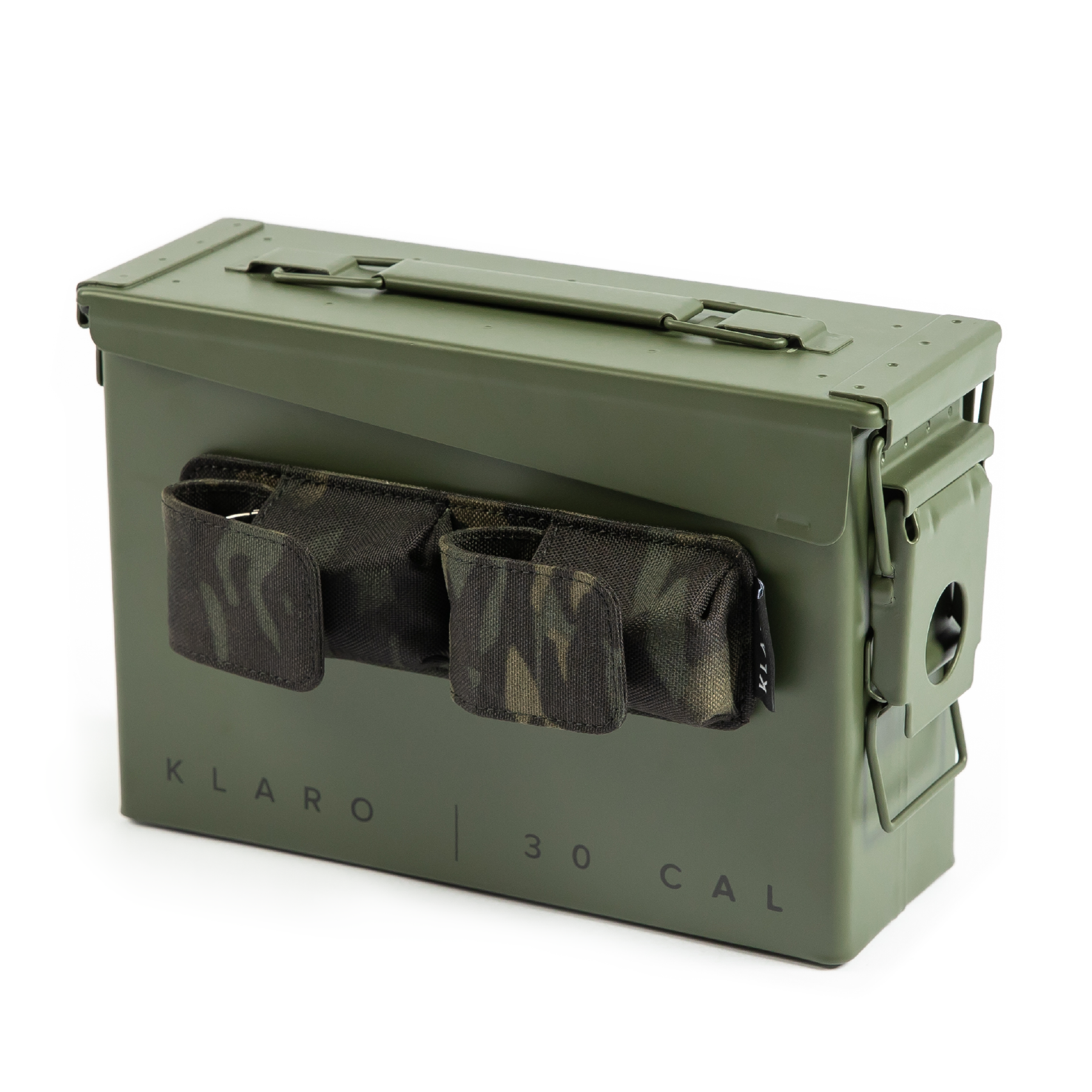
The modern man's travel humidor is now being made with materials like ballistic nylon and waterproof zippers, which you will find on products like Felix. Outdoor enthusiasts are also taking full advantage of products like the 30 Cal Smoke Can, which features a bulletproof military shell, magnetized accessory pouches, and shelved Spanish cedar internals.
Back at the homestead, new developments like the upright Frigador allow cigar owners to control not only the humidity, but temperature and air circulation as well. The advent of digital smart hygrometers like the Klaro Valet make it even easier to check humidification levels, as this can now be done remotely with any kind of connected device. Smart hygrometers also allow you to catalog your cache and keep tabs on temperature and humidity fluctuations over days, weeks, and even months.
And then there is the whole luxury line of humidors, which features some of the most advanced cigar tech on the planet, and materials fit for royalty. While they may not be suitable for the average cigar smoker, these ultra high-end
Puffs de despedida
Hoy en día, los entusiastas de los puros suelen gastar más que nunca en puros de primera calidad. Al igual que el mercado de los licores de alta gama, cada vez es más común que los propietarios de viviendas inviertan en su propia colección de puros de alta gama.
Y, por ello, también están invirtiendo más en humidores de alta calidad. O, en algunos casos, humidores de gran volumen, como los humidores de armario o los walk-in humidors. Ahora no es raro que los particulares construyan humidores de pie capaces de albergar miles de puros.
Aunque existen algunos estándares recomendados para los humidores modernos -como el de cedro español-, a lo largo de los años han surgido variaciones en los materiales y el diseño para crear opciones más asequibles.
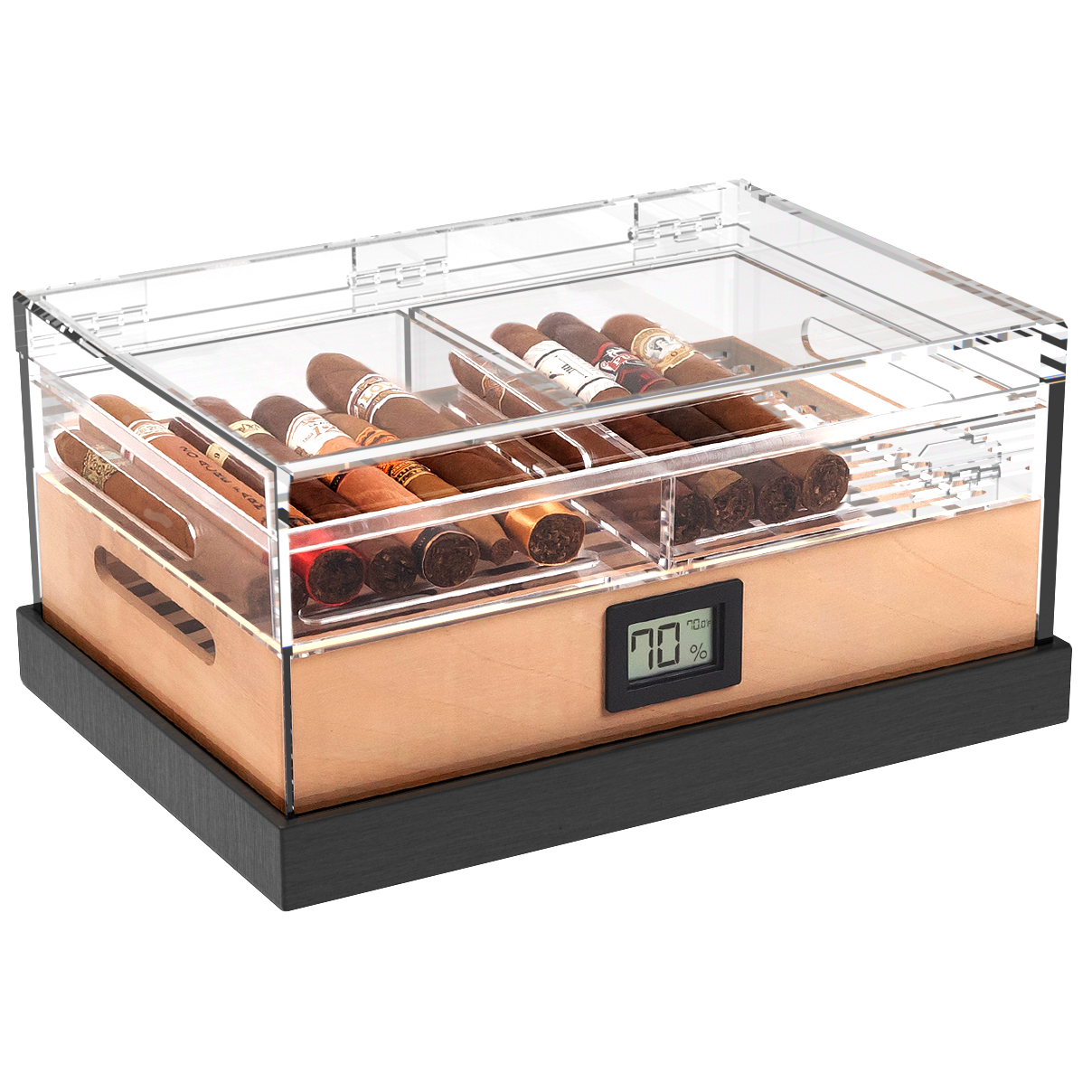
For example, acrylic humidors are now a thing, with some featuring Spanish cedar inlays to maintain humidification levels. Other humidor travel cases are designed to handle depressurization that occurs during flight when the humidor is stored in the aircraft bay rather than the cabin. The market continues to evolve and bring about new types of humidors, variations on designs, and approaches to aesthetics.