So you are in search of a new cigar humidor, but aren't entirely sure which direction to go. You obviously want something made from wood, but you aren't sure whether it is better to go with a more expensive mahogany humidor, or the far more affordable Spanish cedar alternative.
While both types of wood will do a damn good job of protecting and preserving a cigar collection, there are benefits and downsides to each material. There are also some common misconceptions surrounding each type of wood, which is precisely why we are having this little deep dive today. So, without further ado, let's discuss the differences between Spanish cedar and Genuine Mahogany, how each wood plays into the humidor game, and in the process,
Genuine Mahogany Explained

Genuine Mahogany (Swietenia macrophylla) goes by many names, including Honduran Mahogany, Peruvian Mahogany, Bolivian Mahogany, South American Mahogany, Big Leaf Mahogany, and more. For as long as anyone can remember, Genuine Mahogany has been classified as the gold standard when it comes to premium woodworking projects. Easy workability, straight structure, and impressive finishing qualities have caused this wood to be used in everything from furniture-making to musical instruments, and onward to architectural accents and usage in high-end cigar humidors.
However, due to over-usage, Genuine Mahogany is no longer considered "sustainable” in most markets, with farmed alternatives being reviewed as weaker and therefore inferior. Due to this issue, Genuine Mahogany has become increasingly harder to source, thus driving both cost and demand higher.
Characteristics of Mahogany

Due to its consistent grain patterns and gorgeous brown color, Genuine Mahogany features a deep, natural tone that is only amplified by staining and finishing.
Not to be confused with African Mahogany (Khaya ivorensis), which grows in West African countries like Ghana and Cameroon, Genuine Mahogany tends to a breeze to carve. That is because African Mahogany tends to be far more coarse, with interlocking grain patterns causing it to be both heavier and harder to work with than Genuine Mahogany.
Colore
Mahogany's heartwood ranges from pale pink to deep reddish-brown. Prized for its natural luster and optical chatoyancy (an iridescent, wave-like shimmer), the wood deepens and darkens in color as it ages when exposed to light.
Physical Properties
Straight to interlocked, wavy, or irregular grain patterns with a medium, uniform texture and natural, shiny luster.
Janka Hardness: 800 – 900 lbf (moderate hardness for a hardwood, thus making it fairly easy to work with)
Durata
Heartwood pulled from a Genuine Mahogany is resistant to termites, but can be vulnerable to other burrowing insects. Highly revered for its exceptional longevity and structural stability, mahogany furniture often lasts 100+ years with little to no care, with exterior applications like window frames retaining a lifespan of 20+ years on average.
The wood also is known for its ability to resist warping, twisting, and splitting, and contains natural oils that make it resistant to rot, fungal decay, and insects. Additionally, the wood has a very low shrinkage ratio, so it holds its shape no matter how the environment around it changes.
Working with Mahogany
Machining: Very easy to work with, allowing both hand and machine tools to be utilized.
Finishing: Sands, glues, stains, and finishes beautifully.
Mahogany in Cigar Humidors

Although it can be used as a primary material in the manufacturing of humidors, mahogany does not absorb or release moisture easily due to its dense, oil-rich, resilient nature. This means that humidity regulation within a humidor can be quite challenging when this wood is used internally, which is the opposite of what you want when it comes to storing and protecting cigars.
Furthermore, mahogany does not have the aromatic characteristics that Spanish Cedar has in abundance. This is one of the primary reasons why the world's best cigar humidors come lined with authentic Spanish Cedar, and never mahogany.
Factor in the rarity of the material itself, its astronomically expensive price point, unsustainable logging practices, and you can see why this type of wood has fallen out of favor as a premier material for producing cigar humidors.

What Is Spanish Cedar Wood?

Then there is the flagship in the modern cigar humidor flotilla: Spanish cedar. But don't let the name fool you. There isn't anything Spanish about this type of wood. It also isn't a member of the cedar family, even though it may look and smell the part. Like Genuine Mahogany, this species is part of the Meliaceae family, and therefore it has similar grain patterns and structural consistencies from board-to-board.
Scientifically speaking, Spanish cedar belongs to a tree species called cedrela odorata, which is native to tropical regions in Central and South America. Due to its soft nature and straight, lightweight structure, the wood is far easier to work with than mahogany once cured. It is also widely disliked by insects and resists rot fairly well, thus making it a preferred material for a wide array of products and construction projects.
Characteristics of Spanish Cedar

Unlike mahogany, which merely increases in density and size as it grows, Spanish Cedar tends to evolve a bit more as it ages, with the following attributes being the most notable.
Colore
Spanish cedar wood comes in a broad range of colors. Everything from white and pink, to reddish brown can be found in the lumber mill, with the wood growing darker, and richer in color the older the tree becomes.
Physical Properties
Although Spanish cedar is technically considered to be a hardwood, it is quite soft in nature. In fact, the average Janka hardness scale rating for this type of wood is 600 lbf, making it considerably softer than mahogany. That said, its straight grain patterns, consistent appearances, and easy workability still earn it high points with woodworkers.
Durata
Unlike mahogany, which is quite robust, Spanish cedar is rated as having moderate durability when used indoors. So while it will easily dent and scratch, the wood is not prone to decaying, cracking, or warping, thus making it an ideal option for many indoor woodworking projects.
Working with Spanish Cedar
Moderately easy to work with, Spanish cedar's low density and lightweight nature make it easy to carve and work with. However, it can be difficult to sand, so achieving a polished finish usually results in stray strands of wood everywhere. That said, consistent levels of natural oils in the wood help it absorb moisture and stain evenly, which makes for a damn good finished product, and a superior humidor interior material.
Spanish Cedar in Cigar Humidors

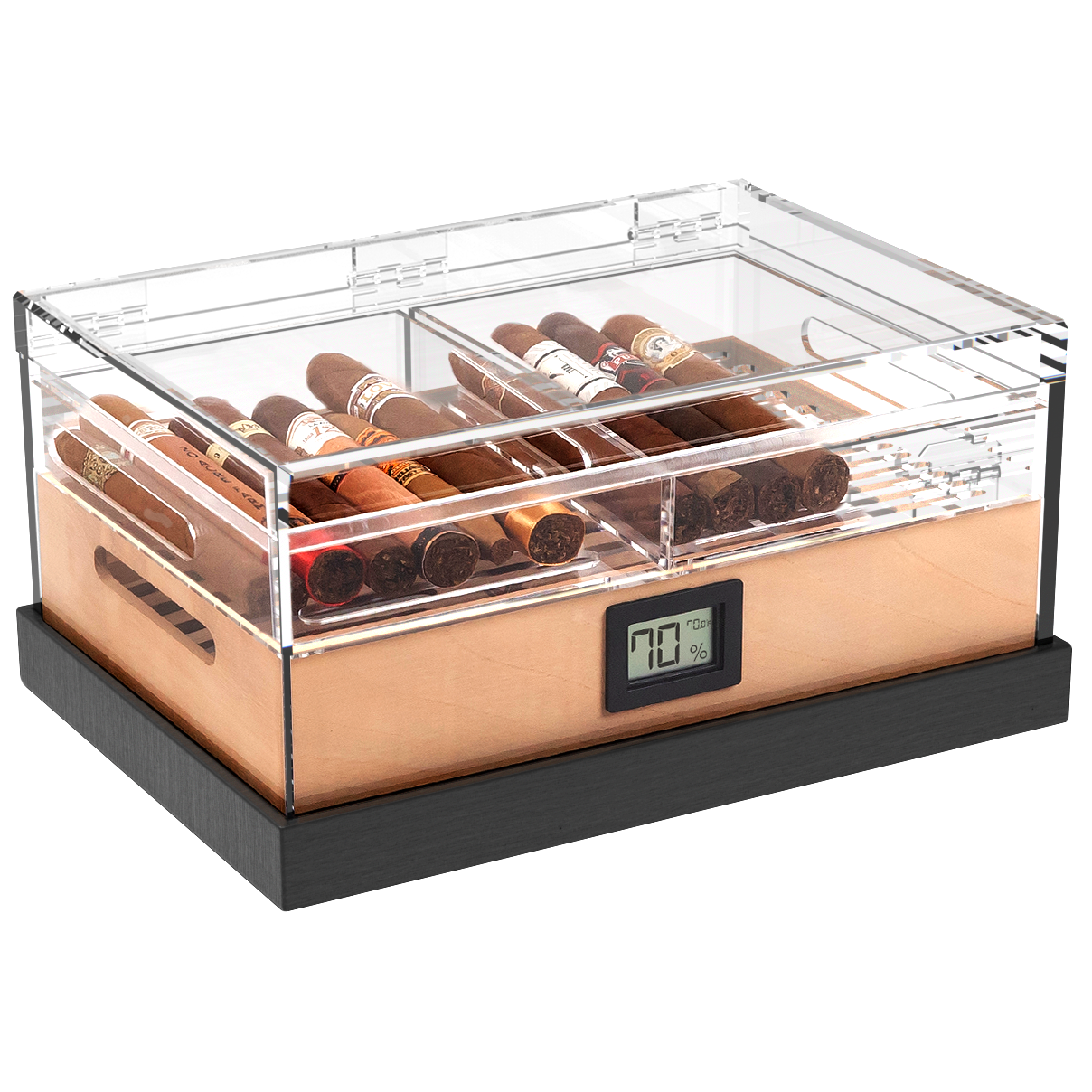
Any humidor that is worth a damn will use Spanish cedar for the interior. The material's impressive list of properties make it an ideal option for both long and short-term cigar storage. Spanish cedar resists mold, deters tobacco beetles, absorbs moisture, and releases humidity slowly and effectively. All those naturally occurring oils make this wood an ideal option for seasoning with humidor solution if an added bump in humidity is required, or for w
A humidor’s exterior might be made from different exotic woods, acrylic, or even metal, but this is done for aesthetic and structural purposes,and has little to do with long-term cigar preservation or internal humidity regulation.
While some humidor manufacturers may use American or Canadian cedar, or even Genuine Mahogany on the interior, none of these woods provide the same properties as Spanish cedar.
These include:
- Eccellente assorbimento e ritenzione dell'umidità
- Aids in stabilizing humidity levels
- Not prone to mold
- Preferred wood for aging cigars
- Protects against tobacco beetles
- Esalta il sapore del tabacco
- No unpleasant resinous odors or sap build-up
However, due to its soft nature, Spanish cedar makes for a poor choice for the outer physical structure on a cigar humidor. While it may be lightweight, the wood is prone to damaging easily, hence it primarily being used inside of a cigar humidor, and not on the outside.
Sbuffi di separazione

Although they may come from the same family in the forest, hail from similar environments, and boast uniform wood patterns and easy workability levels, there are some significant differences between mahogany and Spanish cedar. Yes, both materials can be used to make a cigar humidor. It's just that one is best reserved for constructing the humidor itself, while the other is far more ideal for cladding the interior of the box.
Hopefully this explains why Klaro continues to use no less than a full 5mm of Spanish cedar inside of each of its humidors, and why you will never see anything other than this prized South American wood being utilized. That said, you will find other materials being used on the exterior of our humidors, all of which are sustainably sourced and strong enough to last a lifetime.