Track cigar culture and the popularity of the cigar over the last century, and you’ll see that we’re in the midst of some kind of modern-day "stogie enlightenment period." Quality, creativity, accessibility, global connectivity, and technology all play prevalent roles in the cigar industry of today.
Needless to say, things are looking good for cigar enthusiasts. We’re more informed, inquisitive, and motivated than ever, thanks in part to print and online resources, and the ever-expanding experiences that cigar manufacturers bring to the table.
But to better understand how good we have it, we should probably discuss the fundamental moments that have led us to this point, specifically, the evolution of cigar humidors. For while the technology that fuels the modern Humidor is increasingly crucial, understanding the roots of this core cigar accessory is equally important.
Arten von Humidoren in der Geschichte

As cigars grew in popularity in the United States and Europe in the 19th and 20th centuries, the development of the humidor became all too apparent. In order to build interest in maintaining a quality cigar collection, both on a commercial level as well as from a consumer standpoint, the market needed a product of some sort.
Eventually, various humidors slowly but surely trickled onto the market in different forms, allowing both retailers and smokers the ability to safely store their cigars in a closed environment. Here are a few of the most prominent humidor designs in history that revolutionized cigar storage.
Schrank-Humidore

Some of the earliest models of humidors were of the cabinet variety, replicating the curing barns of South America. The earliest recorded humidor was constructed in the late 19th century by an Irish furniture maker by the name of Terence Manning, who constructed a cabinet-style box for storing cigars. Made from exotic wood imported from South Africa, this grandfather of the modern humidor transformed Manning's business focus, with the Manning name eventually becoming synonymous with high-end cabinet humidors.
Now, as for where Spanische Zeder fits into all of this, that can be traced all the way back to the curing barns of yesteryear, which were often made of this resilient, highly aromatic material. Naturally, it didn't take humidor manufacturers long to realize that this kind of wood also worked well in their products.
As a selectively permeable substance, Spanish cedar excels at maintaining proper internal humidity levels, thus aiding in both long and short-term cigar storage. And while humidors have gone on to be crafted with an array of different materials over the years, Spanish cedar remains the preferred material for lining cigar boxes and humidors alike.
Desktop-Humidore

Zino Davidoff is widely championed as the inventor oHis travels to South America, including Cuba, would ultimately lead Zino to invent a product to imitate the climate and humidity levels of Cuba, but in a far smaller footprint. Davidoff is also credited with creating the first self-regulating humidor as well as the first walk-in humidor, with Davidoff walk-in humidors still being revered as some of the best in the biz today.
Davidoff humidors also achieved widespread respect due to their uniquely crafted aesthetic, with the design being just as much of a focal point as the product's Befeuchtung purposes. While cigar smoking has always been associated with certain styles, Davidoff is responsible for setting the bar for classic, well-designed humidors.
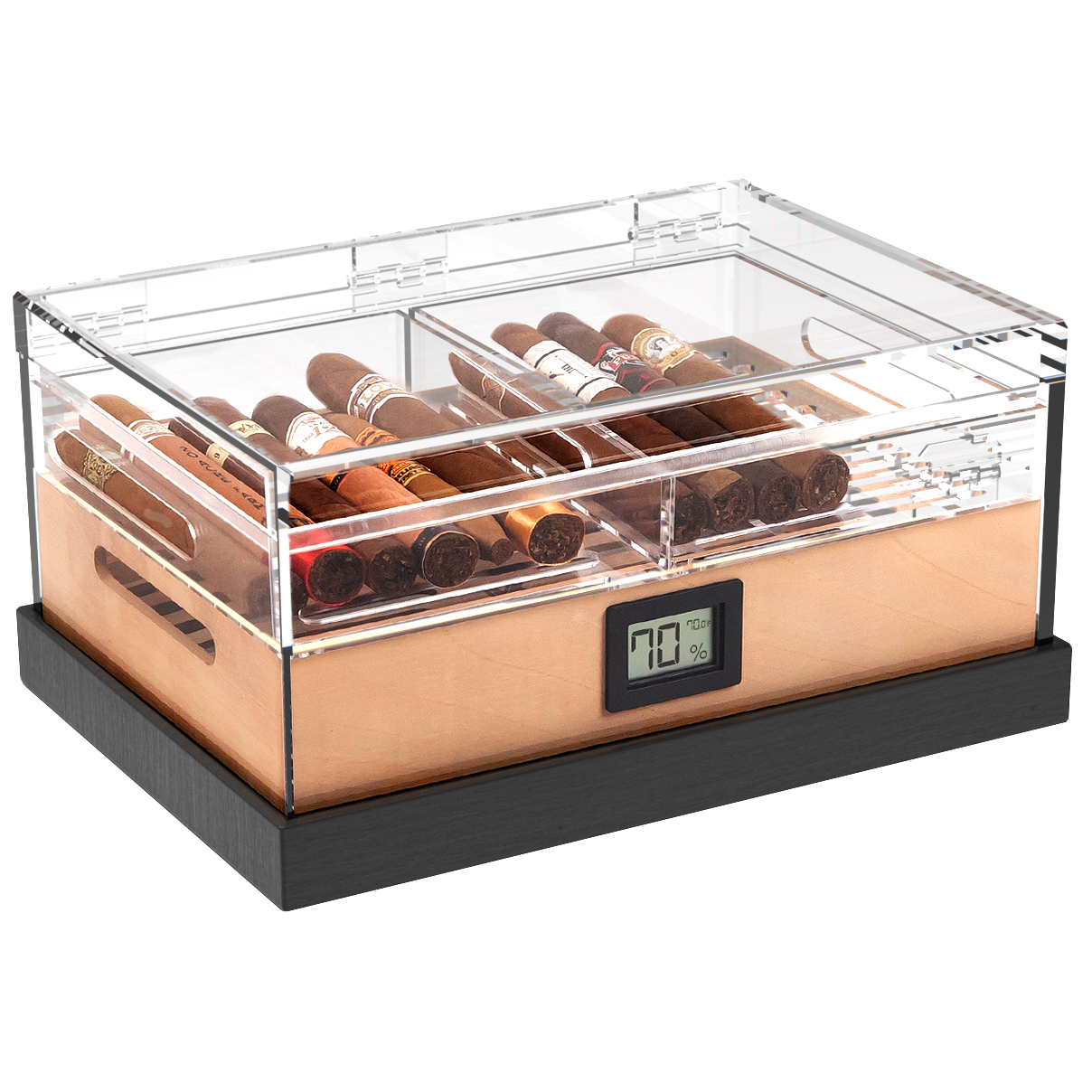
To this day, the desktop humidor remains a cornerstone accessory of cigar enthusiasts around the world. These smaller humidors, with their 10–100 stick capacity levels, were a game changer for the cigar industry, giving smokers an affordable, intuitive way to store cigars pretty much anywhere.
For more on this subject, be sure to check out our deep dive on desktop humidors, and learn why sometimes smaller truly is better.
Tragbare Humidore

While traveling with a clay pot full of stogies, or a small, hinged locking cigar box was always an option, it wasn't until 1998 that a cat by the name of G. Gerry Schmidt of Newport Beach, California, patented the first known portable humidor. Featuring a telescopic design and humidification elements auf the top and bottom of the case, this now outdated design revolutionized the cigar smoking world.
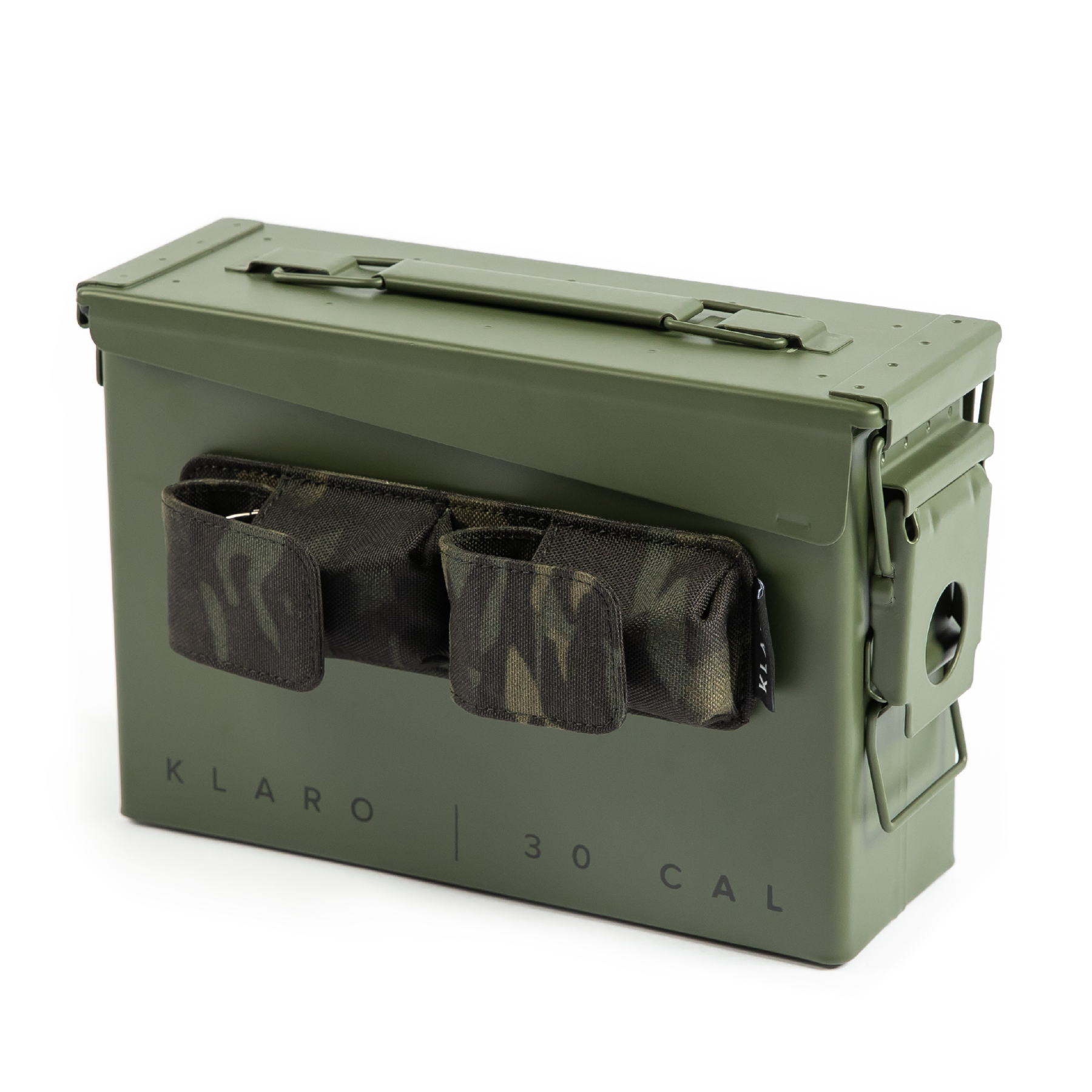
Nowadays, portable humidors and Zigarren-Reiseetuis feature integrated humidification trays or pockets for cigar humidity packs. This allows the traveler to take their cigars with them anywhere they wish, while still keeping them properly humidified. From a few sticks in a carrying case to a couple dozen smokes in a repurposed 30 Cal Ammo Can, weekend getaways and business trips have never been better.
Moderne Humidore

As for modern humidors, they tend to be just as technologically advanced as they are aesthetically alluring. The materials being used have also grown increasingly diverse, with everything from sleek and luxurious to rugged and waterproof being an option.
Technologie

Although modern humidors continue to evolve, some of the core elements remain the same. Quality craftsmanship, Spanish cedar linings, a good seal, accurate humidity readings, and an efficient humidification system are just as important in humidors today as they were in earlier models. However, venture outside of these fundamental pillars, and you will discover that a lot has changed in the past decade alone.
The modern man's travel humidor is now being made with materials like ballistic nylon and waterproof zippers, which you will find on products like our Flint humidor travel bag. Outdoor enthusiasts are also taking full advantage of products like the aforementioned Smoke Can, which features a bulletproof military shell, a waterproof seal, magnetized accessory pouches, and shelved Spanish cedar internals.
Back at the homestead, new developments like the upright Fridgador allow cigar owners to control not only the Feuchtigkeit, but temperature and air circulation rates as well. The advent of digital smart hygrometers, like the Klaro Valet, now makes it even easier to check humidity and temperature levels, as this can be done remotely with any kind of connected device. Additionally, smart hygrometers now grant you the chance to catalog your cache and keep tabs on temperature and humidity fluctuations via the cloud, as you track fluctuations in hourly, daily, weekly, and monthly time spans.
And then there is the whole luxury side of cigar humidors, which features some of the most advanced cigar tech on the planet, and materials fit for royalty. While they may not be obtainable by the average cigar smoker, these ultra high-end models are tailor-made for cigar lounges and elite smokers alike, und sind in many ways the next evolutionary step in cigar humidors.
Abschiedsschmerz

Cigar enthusiasts of today are buying more premium stogies than ever before, and the trend doesn't show any sign of slowing. Similar to the high-end liquor market, it’s becoming more commonplace for homeowners to invest in their own private collection than spend the big bucks at a bar or lounge. Not only is it more cost-effective, but you also get the benefit of relaxing at home and hosting as you see fit.
Due to the growth of the "smoke-and-si" trend, cigar smokers are investing in high-quality desktop humidors like never before. Have the space, financial means, and acute interest in amassing an armada of premium cigar blends? High volume setups like large cabinet humidors and walk-in units are always an option in private household settings.
But regardless of what size, shape, cigar storage capacity, or vintage your humidor is, it all serves the same purpose, and that is to keep the world's best premium cigar blends in prime smoking form. So as the cigar smoking landscape continues to evolve, and new types of humidors hit the market, it is important that we remember where those stogies' storage vessels originated, and recognize how far we have come as a sub-culture.