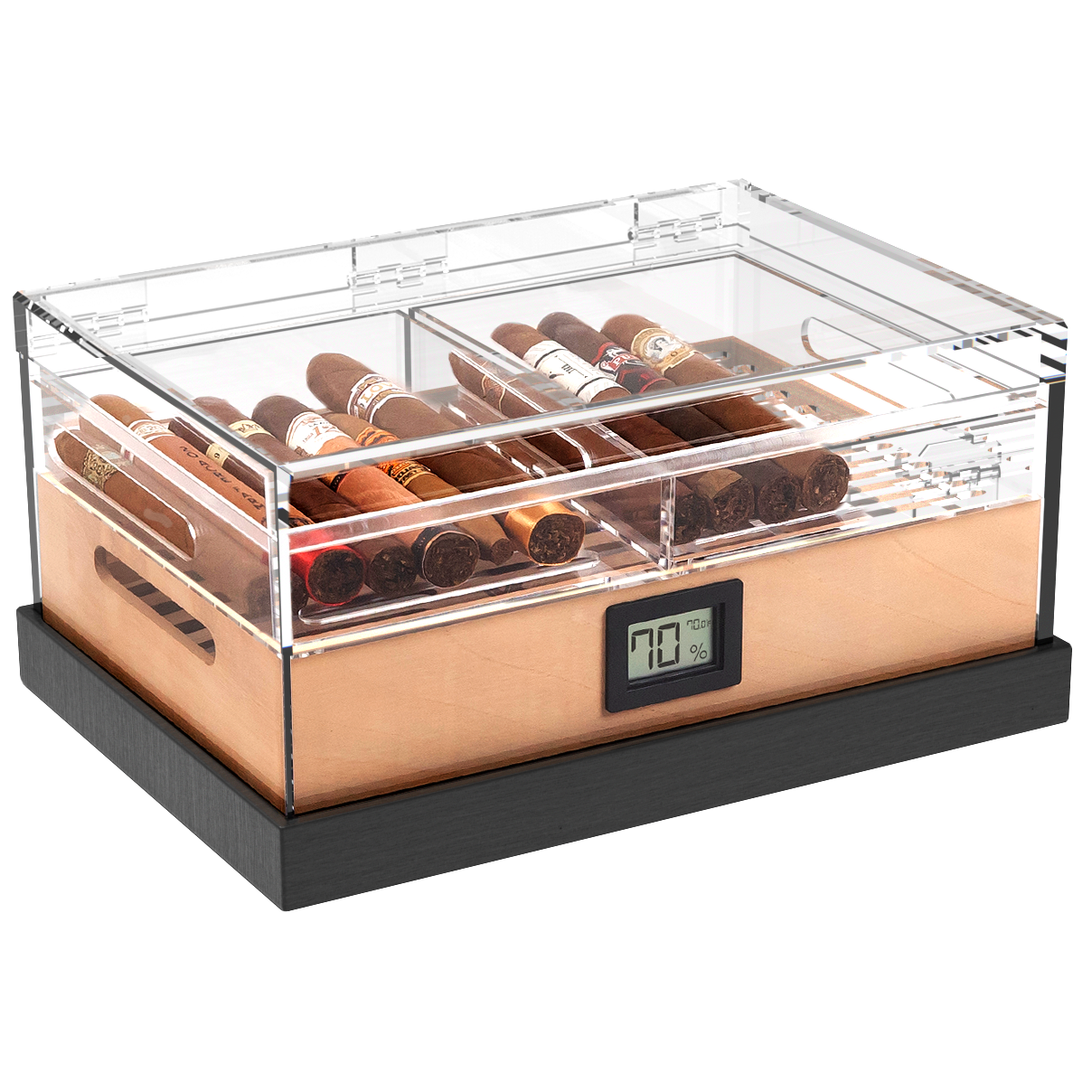
Managing humidity levels is the single most important thing you can do to protect and preserve your cigar collection while enhancing their flavors and smokeability. Cigars are dynamic. Their flavors and physical attributes can change depending on the humidity levels they are stored at. Too humid or not humid enough, and cigars will dry out, mold, smolder when you smoke them, or burn unevenly. But if you can get the humidity right, you avoid a lot of headache and get the best experience when you smoke your cigars.
Humidors are the best tool to create the proper humidity levels for your cigars. Once you learn how do humidors work and dial in the correct humidity, you can store your cigars for longer and even age them to improve their flavors.
We’ve previously covered how to lower the humidity in your humidor. In this article, we will investigate how to increase the levels of humidity within your humidor with humidor maintenance and humidor seasoning.
The Quick Answer
The humidity inside your humidor should typically remain between 68%-72%. When your humidor isn’t holding humidity, it’s likely a result of one or more of the following problems: seal issues, overcrowding, low humidor solution, or an ineffective humidification source. You can fix many of these issues, but you will need to determine if it’s a quick fix or a problem with the quality of your humidor.
If you use a Klaro Hydro Tray, Winter + Dry humidor solution can help when regular solution is not maintaining humidity in cold or dry conditions. When switching an already-filled tray from regular to Winter + Dry solution, remove about one-third of the tray contents before adding the winter formula, mix, and replace the cover. Follow your model’s instructions and do not overfill. This is a formula change, not an instruction to keep adding liquid to a full tray.

Assessing Your Humidor’s Current Humidity
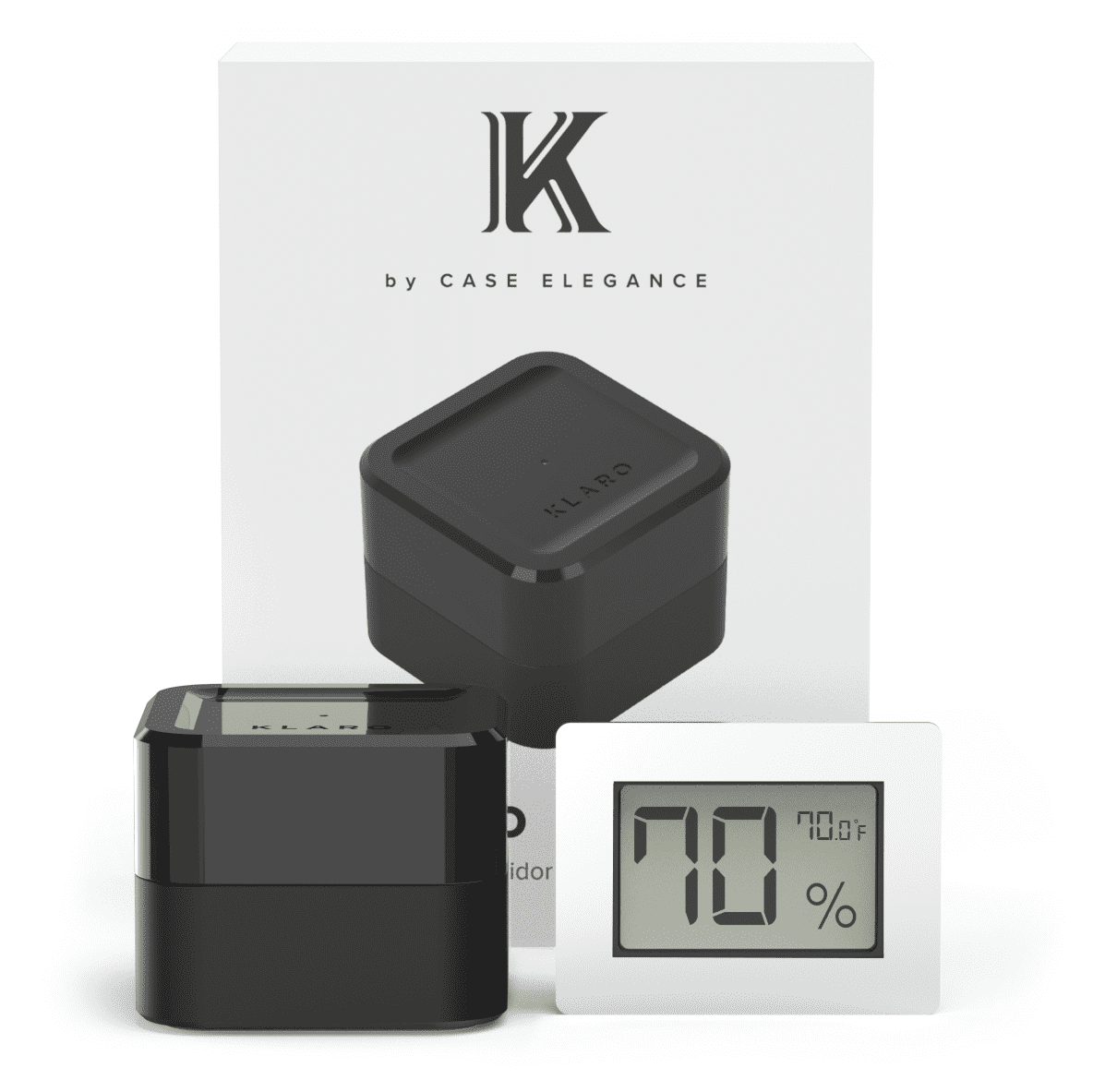
First, how do you know the humidity level within your humidor? An accurate hygrometer measures relative humidity. Analog and digital models should be checked according to their manufacturer’s instructions. Klaro digital hygrometers arrive factory-calibrated; confirm a suspected error before changing that calibration. Some models permit only one recalibration, and the procedure varies by model. If you are unsure, contact the manufacturer rather than adjusting the reading to match an assumed humidity level.
But a humidor’s hygrometer is only as good as the seal of the humidor. The seal must remain airtight. Otherwise, outside air will enter the humidor and will both compromise the humidity levels and, therefore, the hygrometer’s reading.
You should inspect your cigars regardless of what your hygrometer reads. Dry cigars will crack when pinched, and you should be able to detect the dryness audibly. Cigars that are too wet will feel doughy and won’t have a spring when you squeeze them. Regardless of your hygrometer reading, if your cigars are coming out dry or wet, you have a humidity problem.
Causes of Humidor Not Holding Humidity

So why would your humidor be too dry? Well, it’s either losing moisture or it doesn’t have enough reserve moisture to offset dry conditions, which could be caused by several factors. Consider the following common issues:
Inadequate Seasoning
Seasoning refers to the amount of humidity stored within the Spanish cedar or whatever other material is inside the humidor. When you season a humidor, you bolster that wood with excess moisture. (That’s why Spanish cedar is commonly used; it stores excess humidity and releases it when conditions are dry). If the wood doesn’t have enough moisture, there’s nothing to release when the conditions are dry.
If your humidor continually struggles to hold humidity levels, you may need to season your humidor again to bolster that wood with additional moisture.
Poor Seal or Leaks in the Humidor
A poor seal or leaks in the humidor compromise its ability to maintain consistent humidity. If the lid doesn’t close tightly or there are gaps, moisture escapes, making it difficult for the humidifier to stabilize the environment. You can inspect the seal visually, but we recommend using the “dollar bill test” to identify gaps: place a dollar bill on the seal, close it, and pull to identify any location where the bill releases.
A tight seal is critical to preserving cigars at their optimal condition. If your seal has been compromised, it may be time to invest in a new humidor.
Incorrect Hygrometer Readings
A faulty or inaccurate humidor hygrometer can misrepresent humidity levels. Many consumer hygrometers can be checked at home using a suitable reference, such as a hygrometer calibration kit. Follow both the reference kit’s directions and the instructions for your specific hygrometer. Adjust only if your model supports it and an error has been confirmed; otherwise note the verified difference or contact the manufacturer. Factory calibration does not make every model user-adjustable.
If you suspect your hygrometer’s reading is incorrect, inspect the seal to see if outside air may be entering your humidor. Also consider the placement of your hygrometer, as this also may affect its reading. For example, a hygrometer placed close to the humidifier may cause a higher humidity reading. Or vice versa. If the reading can be attributed to these factors, the hygrometer may not be faulty.
Issues with Humidification Devices
Humidification devices that are underperforming, overfilled, or improperly maintained can result in fluctuating humidity. If the device isn’t distributing moisture evenly or has dried out, it will fail to regulate the humidor. Check the device regularly, refill it with distilled water or humidor solution as needed, and clean it to ensure consistent performance.
Temperature and Humidity
External temperature and outside humidity can significantly impact a humidor’s ability to maintain proper levels. Extreme heat or cold and low ambient humidity can make it harder to sustain ideal conditions inside the humidor. Keeping your humidor in a climate-controlled environment away from direct sunlight, vents, or drafts helps minimize these external influences.
But keep in mind where you live, the season, and how these can affect general humidity (and your humidor). Those who live in dry, arid climates may require more frequent humidor solution refills. The same goes for those in frequently cold, dry climates, or those storing cigars through the winter.
Humidor Size vs. Cigar Capacity
Overfilling a humidor can block airflow and prevent proper humidity distribution. Meanwhile, an underfilled humidor could allow excessive airflow, drying out cigars (though this is far less likely). It’s important to match the humidor’s size to its cigar capacity, ensuring adequate space for proper circulation while avoiding excessive empty space that can make humidity levels harder to stabilize.
Rotating your cigars is an important step to help even an adequately stocked cigar case and certainly an overcrowded one. Rotating cigars will allow each of them to have closer proximity to the humidifier, which should help maintain that homeostasis.
Methods to Increase Humidity
A humidifier releases humidity into the air of your humidor. Humidors can have two different types of humidifiers: active or passive. Active humidifiers force humidification into the air, generally with fans, as with electric humidors or frigadors. Passive humidifiers release humidity naturally into the air through natural processes of osmosis and evaporation.
Passive humidifiers include humidifier packs, gel beads and crystal humidifiers, and humidor solution. At its most basic form, you could put a shot glass filled with distilled water in your humidor to act as a passive humidifier. Each method slowly increases the humidity in the humidor.
With active humidifiers, you can increase humidity levels quicker, but this may be rougher on your cigars than if the humidity increases slowly and naturally as with a passive humidifier. Avoid raising humidity levels too quickly as this can cause physical damage to the cigars.
Regardless of the type of humidifier your humidor uses, you can help bolster humidity levels with a few DIY tricks that are easy and safe. Just note that if you increasingly need to bolster humidity, it may be that your humidor is not equipped with the right type of wood (Spanish cedar) to retain humidity and respond to fluctuations in outside humidification levels. That, or your seal may be compromised.
Dealing With Low Humidity in Your Humidor
In times of extreme cold, or in parts of the world where intense dry air is prevalent, humidor humidity can drop at an alarming rate. Sometimes, it's a bit more difficult to keep the humidity up. This definitely depends on where you live and the season.
Fortunately for you, we have come up with a super-easy way to raise humidity levels inside a Klaro Humidor, and it all boils down to a little bit of maintenance, a couple of inexpensive industry-leading products, and a bit of due diligence on your behalf.
Step 1: Remove Cigars From the Humidor
While the idea of taking all of your precious stogies away from their source of humidity may sound counterintuitive, this is a vital step in making sure that your cigar collection is seeing proper rotation. Humidors work best when the cigars inside them are rotated on a weekly or bi-weekly basis, so taking everything out so that it can be redistributed inside in reverse order is the most logical method to achieving this goal.
Step 2: Refill the Hydro Tray/Hydro Channel With Winter Solution
There's a reason why Klaro's Winter + Dry Climate Humidor Solution still has a perfect 5-star rating after all these years on the market. This formula is intended for cold or dry conditions when the regular solution is not maintaining the desired humidity. Use it according to your humidor model’s instructions and monitor the reading as conditions change. This product has proven to be so popular, that we have even started offering a specialized Winter + Dry Climate Klaro Membership in conjunction with our best-selling Klaro Humidor Membership service.
When changing an already-filled Klaro Hydro Tray from regular to Winter + Dry solution, remove about one-third of its contents before adding the winter formula, mix, and replace the cover. Do not simply top off a full tray. For routine refills, or if you use a Hydro Channel in a Klaro MAG desktop humidor, follow that model’s refill instructions and capacity limits. Keep liquid away from the cigars and check humidity after the adjustment.
Step 3: Continue to Rotate Your Cigars
For the next week, continue to rotate those stogies every day. By doing this, you will allow the humidity-absorbing characteristics of the tobacco to redistribute the damp air in a more uniform fashion. This will also help keep any cigars sitting near those supercharged gel crystals from over humidifying, and will help guarantee an even burn on each cigar.
Step 4: Inspect & Adjust Accordingly
If for whatever reason your hygrometer or Klaro Valet App, remains below the recommended range for your model after a week or so, check the seal, hygrometer accuracy, and available space in the humidification device before adding more solution. Do not add liquid to a full tray or channel. However, being that there is only so much fluid that can be placed inside a Klaro Hydro Tray or Hydro Channel, the addition of a humidity pack may be in order. Available within the Klaro Humidity Pack Membership, these clever packs do an outstanding job of adding that extra kick of humidity to a humidor that has already been maxed out with gel crystals and solution.
The great thing about these humidity packs is that it takes them forever to go bad, so when warmer weather hits all you have to do is place the packs back in their Klaro bag, and set them somewhere cool and safe until their services are required once more. Alternatively, you can opt to procure an additional set of Hydro Channels, which have been engineered to fit most Klaro Humidors. Simply load them with fresh gel crystals and a healthy splash of Winter Solution, rotate them every day for the next week or so, and away you go.
What Makes the Klaro Hydro Channel So Special?

While Klaro's original Hydro Tray System works wonders, the addition of one (or two) of our Hydro Channels continues to be the safest and fastest way to add a bump of humidity to the interior of a humidor. With its slim vertical design, perforated upper lid, and ability to be easily augmented with Regular Humidor Solution or our custom-blended Winter + Dry Climate Solution, the Hydro Channel allows you to give your stogies what they need to remain in prime smoking form without sacrificing a ton of storage space.
Make the Most of Your Humidor's Interior
Due to its vertical design and standard toro cigar shape and size, the Hydro Channel allows you to stack cigars on either side, thus making it an ideal divider.
Less Mess & Effortless Refills
Since the Hydro Channel features a vertical profile and sits anywhere within the confines of a humidor, there is no need to remove it in order to conduct a refill. Just remove the lid, drop in some fresh humidity gel crystals and/or humidor solution, and clip the lid back into place. No more messy spills or having to remove your entire cigar collection to get to the Hydro System!
Double-Down for Extra Humidity Boosts
Since each Hydro Channel kit comes with two units, you can easily add a second one to further boost humidity levels during dry winter months or if your humidor resides in an arid environment.
Easy Removal and Storage
Humidity levels back to optimum numbers? Merely remove the Hydro Channel from your humidor and place it in a sealed bag or container until it is needed once more.
The Hydro Channel’s perforated cap helps distribute humidity, but it does not eliminate the possibility of over-humidification. Keep cigars from touching liquid or gel, follow the device’s refill limits, and continue monitoring humidity and cigar condition.
DIY Solutions for Humidity Control

To bolster the humidity levels in your humidor on your own, take advantage of natural processes like evaporation and osmosis.
Our first recommended DIY humidity control: sponge and distilled water method. Simply soak and then wring out a sponge with distilled water. Place the sponge on a small tray to not expose the humidor elements to moisture, and then observe any humidity fluctuations with your hygrometer over the next 24 hours. You may need to repeat this process.
Next, you can also use household items to bolster the humidity levels in your humidor. Fill a small bowl with distilled water and place this inside of your humidor uncovered. Just like the method of filling a shot glass with distilled water, the bowl will allow small amounts of water to evaporate and absorb into the wood of the humidor to release when humidity levels drop.
Environmental Factors and Humidor Placement
Beyond increasing the humidity levels through the humidifier or with DIY methods, you can give your humidor a leg up with a few practical steps. For example, where you store your humidor can impact how well it protects your cigars. In general, avoid locations that may expose the humidor to temperature fluctuations. Ideally, you won’t place your humidor near an air conditioner, heater, or a window, where sunlight may cause the temperature to rise.
Avoid storing your humidor in any room of your house that is affected by seasonal changes, (i.e., rooms prone to getting cold in the winter or hot in the summer). Additionally, the room where you store (and therefore open) your humidor should be kept at a consistent humidity level. Room humidifiers and dehumidifiers may help you moderate those levels.
Lastly, consider how often your humidor is getting opened. The more frequently you open the top and expose your humidor to the exterior humidity and temperature, the more the humidor will have to work to recalibrate itself. If you have your humidor in a public area where guests may be prone to open it, consider a glass top humidor that allows them to see your collection without opening the box.
Advanced Techniques for Humidity Control
Seasoning your humidor is the single most important thing you can do to your humidor to get its best performance. Seasoning is the act of bolstering the wood inside your humidor with enough humidity that it can respond effectively when you add a lot of cigars or when the exterior humidity levels drop.
We provide step-by-step seasoning instructions for most Klaro humidor models. But the basic premise is fairly straightforward:
- Using Klaro humidor solution, wet a paper towel and wipe the inside Spanish cedar with humidor solution.
- Fill your humidifier with humidor solution and leave in the humidor until it reaches at least 68% for 1-3 consecutive days.
- Add crystals to your humidor solution and observe for any fall in humidity level. Add more solution if needed.
- Add cigars and observe for consistent humidity levels.
While this is a fairly simple process, it helps the long term performance of your humidor by saturating the wood with a formidable amount of excess humidity. That way, when the cigars you add soak up the humidity in the air, the Spanish cedar humidor wood will release its reserves.
Humidor solution helps regulate moisture, but it is not a guarantee that humidity cannot rise too high. Use the formula recommended for your model, follow its refill limits, and keep monitoring relative humidity rather than relying on an automatic cutoff at 70%.
Troubleshooting Humidor Seasoning Issues

Humidor seasoning itself is quite simple, as the purpose is to provide moisture reserves in the wood, which happens naturally with Spanish cedar. Re-seasoning an old or dry humidor may also help improve its performance if it has lost moisture content over time.
Seasoning an old humidor is usually done to recondition it after a period of disuse or when it’s dried out. The process is similar but often requires less time because the cedar has already been conditioned to some extent. In this case, you may simply add a bowl of distilled water or a seasoning pack and monitor humidity for a shorter stabilization period (usually a week). Wiping the interior is optional, as the wood likely already has a base level of moisture.
When seasoning, be careful not to make the following common mistakes:
Over-saturating the Wood: Applying too much water or spilling and leaving standing water in the humidor can warp or damage the cedar.
Using Tap Water: Tap water contains minerals and impurities that can cause mold or residue to build up inside the humidor. Always use distilled water or propylene glycol.
Rushing the Process: Humidors require time to stabilize. Opening the lid too often or skipping humidity monitoring can lead to inconsistent conditions.
Neglecting the Hygrometer: Failing to calibrate or check the hygrometer can cause inaccurate readings, leading to over- or under-humidification.
Inspecting and Fixing Humidor Seals
A properly functioning seal is essential for maintaining consistent humidor humidity. A compromised seal allows moisture to escape, making it difficult to regulate humidity and keep cigars fresh. It can also lead to false readings from your hygrometer, which might lead you to make adjustment mistakes. Let’s discuss seals in great detail.
How to Check for Leaks or Gaps in the Seal
There are several quick and easy ways to check the quality of a seal. Earlier, we mentioned the dollar bill test, which is an effective way to test the seal. Simply close the humidor lid with a dollar bill partially inside and gently tug on it. Resistance indicates a good seal, while little to no resistance suggests a gap. You should repeat this test around the perimeter of the lid.
Next, examine the edges of the lid and body for visible gaps, misalignments, or warped wood. A visual inspection can help you catch damage caused by bumps, drops, or any other unintended force.
DIY Seal Fixes
While a bad seal is a serious issue—and the reality is that you may need to replace your humidor—there are a few last-ditch efforts to make that may fix the problem. Here is a step-by-step walkthrough.
First, check the hinges. Loose hinges can prevent a tight seal. Tighten screws with a small screwdriver to ensure the lid closes snugly.
Next, consider adding a piece of weatherstrip or foam seal to the lid. Just be careful not to affix the lid to the actual humidor with any addition. Simply apply a thin adhesive weatherstrip or foam tape around the lid’s edge to create a tighter seal. You might also use a specialized wax to fill minor gaps and improve the seal without damaging the wood. If the wood has warped, sanding the edges lightly and reapplying a protective finish can restore the seal.
You should only try these methods as a last-ditch effort and you are no longer worried about potentially damaging the humidor. More often than not, you will need to replace the humidor completely.
Other Reasons to Replace Your Humidor
So how do you know when the problem with your humidor is bad enough that you need a replacement?
- Severe Warping or Damage: If the lid or body is warped beyond repair, the humidor will no longer maintain humidity.
- Persistent Leaks: If all attempts to repair the seal fail, replacing the humidor is the best option to ensure your cigars are properly stored.
- Mold Issues: Mold inside the humidor, especially if it penetrates the wood, is often irreparable and unsafe for cigars.
- Outgrown Capacity: If your collection exceeds the humidor’s size, and you are having trouble maintaining humidity due to the quantity of cigars, it may be time to invest in a larger model.
By regularly inspecting and maintaining the seal, you can prolong your humidor’s life and keep your cigars in pristine condition.
Issues with Humidification Devices

Types of Humidification Devices and Their Differences
There are several popular types of humidification devices, each offering unique benefits and drawbacks. You may be familiar with sponge or foam-based devices that are affordable but require frequent maintenance and may not distribute moisture evenly. Gel-based devices last longer and self-regulate humidity to some extent, making them a popular choice for beginners. This is what you will find with many Klaro humidors (refillable with a Klaro Membership). Bead-based systems provide exceptional consistency and are reusable with proper care. Meanwhile, electronic humidifiers offer the highest precision and are ideal for larger humidors.
The humidification device in your humidor largely depends on the size of your humidor and the level of control you want over the humidity. Understanding these differences helps ensure your cigars are properly preserved.
How to Maintain and Refill Humidification Devices
Proper maintenance of your humidification device is essential to ensure consistent performance. For sponge or gel-based devices, regularly inspect and refill them with distilled water or a propylene glycol solution to maintain optimal humidity. Bead-based devices should be rehydrated when they appear dry but not oversaturated.
Electronic humidifiers require occasional cleaning of sensors and fans, along with refilling their reservoirs. Always follow manufacturer instructions for maintenance to prolong the life of your device and ensure a stable environment for your cigars.
When to Replace Your Humidification Device
Temporary humidification devices have a finite lifespan and should be replaced when they can no longer maintain consistent humidity levels. Foam and sponge devices typically degrade over time and may lose their ability to retain moisture effectively. Gel packs can dry out and become brittle, signaling the need for a replacement.
Beads may lose their porosity but tend to hold out longer if you routinely add humidor solution as needed. Finally, electronic devices can experience sensor or mechanical failures. If you notice persistent fluctuations in humidity, even after maintenance, it’s likely time to replace the device. Regular monitoring of your humidor’s humidity and the condition of your device ensures your cigars remain in perfect condition.
Troubleshooting Common Humidity Issues

So how do you know if your humidor’s humidity is too high or low? Well, your hygrometer is your best line of defense. If its sensors are sealed correctly (and your humidor is sealed correctly), it should provide you an accurate reading, and you want anything between 68-72% humidity. But problems can occur, and your hygrometer may not be accurate. Look for these tell-tale signs that your humidity levels are too high or low.
Too high:
- Cigars become soft to the touch and tobacco does not spring back when you pinch it.
- Cigars are more prone to smolder or smoke unevenly when lit.
- Cigars develop mold.
Too low:
- The tobacco inside the cigars become brittle and you detect crackling.
- Cigars smoke unevenly and are prone to canoeing or tunneling.
- The cigar wrappers begin to crack.
Resolving Low Humidity Levels:
If the humidity becomes too low, make sure your humidor solution is replenished. In extreme cases, add humidor solution, humidor packs, and an open distilled water container to try to increase humidity levels. But please monitor the situation closely as you may push the humidity levels too high.
Resolving High Humidity Issues
If your humidor becomes too humid, you may need to temporarily remove the humidifier or leave open the humidor lid for an extended period of time until the levels drop.
Best Practices for Humidor Maintenance
A good humidor should sustain its humidity levels for an extended period of time. But even the best humidors require routine preventative maintenance.
First and foremost, monitor your humidity levels to detect significant humidity level changes before they damage your cigars. You can do this manually, keeping a close eye on the hygrometer. But this makes you more prone to forget. Case Elegance sells the Klaro Valet Smart Humidor which makes it easy to monitor your humidor from your smartphone. Easy, convenient, and potentially money-saving, this is a great way to keep tabs on your humidor.
You may need to regularly add humidor solution to your humidor, especially if you frequently add new cigars. As new cigars are added, they will take humidity from the wood and your humidifier—as they are supposed to—and you need to replenish those sources with humidor solution. Monitor those levels once a month.
To clean your humidor, we recommend occasionally wiping the inside with a slightly moist towel, preferably when you re-season your humidor, which we recommend. Use distilled water for this process and avoid saturating the wood with any moisture.
Lastly, there are a few common mistakes to avoid and tips to follow when storing cigars in your humidor.
- Do not overpack your humidor. Adding too many cigars to your humidor will make it nearly impossible to achieve consistent humidity levels. Either purchase another humidor or upgrade to a humidor large enough to house the amount of cigars you wish to keep on hand.
- Create a humidor solution schedule. Don’t forget routine refills. Create a schedule so you know when the last time you refilled and how long until your next refill.
- Consider the hygrometer placement. The closer the hygrometer is to your humidifier, the higher the reading will be. Make sure the hygrometer reading is reflective of the general condition.
- Rotate your cigars. Moving your cigars around in your humidor every few weeks will allow them to be exposed to different proximities to the humidifier, which should help them keep a consistent humidity.
Upgrading and Maintaining Your Humidor

Knowing when to replace your humidor is a matter of determining when the effort to maintain humidity is too cumbersome or more expensive than purchasing a new device. Or if your humidor is putting your cigars at risk of permanent damage. By routinely maintaining your humidor, following recommended steps for reseasoning, replacing the humidification device, or adding humidor solution, you can better and more quickly identify issues that mean your humidor will no longer function as it should.
Owning a humidor shouldn’t require extensive work on your part. Instead, a quality humidor box will regulate humidity to protect your cigars and ensure they are in their best smokeable condition whenever you choose to partake. While some troubleshooting may be required, you shouldn’t feel as if you are consistently fighting your humidor to hold the proper humidity levels to keep your cigar safe. Use these tips and know when it’s time to buy a new humidor.
Conclusion

As you monitor your humidor, add cigars, and experiment with different humidity levels, you will learn many lessons about how to operate and maintain your humidor, including how to lower or increase humidity levels as needed. The good news? You have already won the battle by storing your cigars in a dedicated humidor, and now the process simply dials in the exact ideal environment.
And for more information, explore our Frequently Asked Questions below.
How Often Should I Check My Humidor’s Humidity?
You should regularly monitor your humidor for fluctuations in humidity levels, especially during seasonal switches or when the outside humidity levels or temperatures have fluctuated recently. You should also closely monitor your humidor’s humidity levels in the first 24-36 hours after adding new cigars to your collection, as these new additions may absorb humidity within the humidor.
What is the Ideal Humidity Level for Cigars?
We recommend you store your cigars between 68-72% relative humidity. In some cases, you may opt to go above or below this, as in the case with flavored cigars or when aging certain cigars. But humidity levels outside this range pose some danger to your collection.
Can I Use Tap Water in My Humidifier?
While we recommend humidor solution be used in your humidor and your humidifier, distilled water is the next best option, which is free from chemicals like chlorine found in tap water. These chemicals may interfere with your humidor's performance.
How Do I Know if My Humidor Needs Seasoning?
If you begin to detect that your humidor is not able to hold consistent humidity levels without frequent humidor solution refills or that it quickly dips in humidity when you add a few cigars to your collection, it’s likely time to re-season your humidor.
What Should I Do if My Humidor Smells Musty?
Regular maintenance is important for any humidor. Monitor it frequently to ensure its humidity levels are correct, and also inspect for the potential of mold or musty smells that might indicate the interior has been compromised. If you smell anything musty, remove the cigars and humidifier and clean the inside with a soft cloth or sponge made damp with distilled water.